
UK Scraps 'Aim to Permit' Gambling Rule: Councils Get Veto
Andy Burnham's government repeals the 21-year betting shop licensing presumption, giving local councils new powers to block openings and forcing Adult Gaming Centres into planning permission for the first time.
Category: News · By Growl Games Editorial Team · Wed Aug 26 2026 · Updated Wed Aug 26 2026
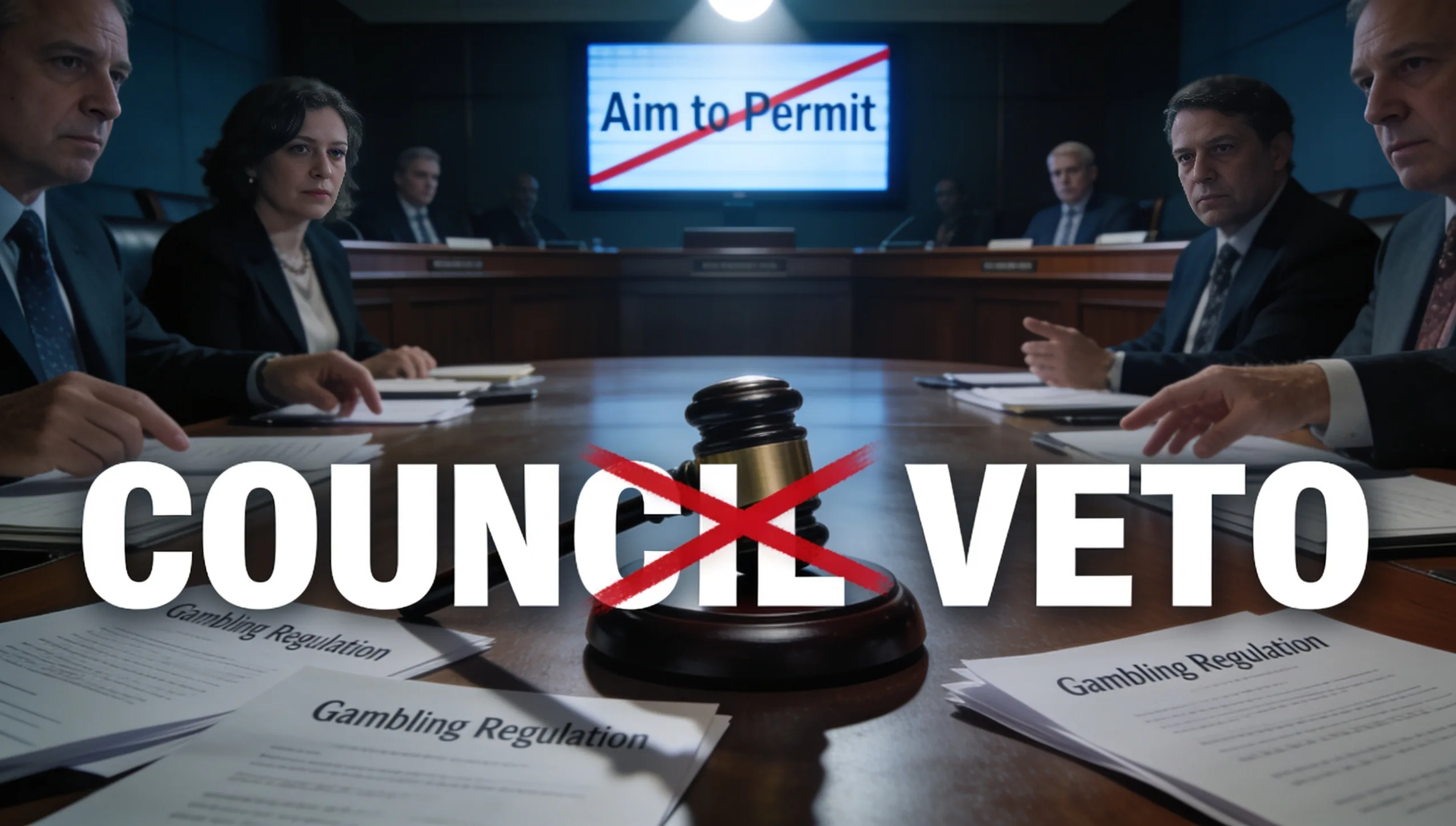
The UK government has announced it will repeal the 'aim to permit' rule enshrined in Section 153 of the Gambling Act 2005 — a 21-year-old licensing presumption that required local councils to approve betting shop and adult gaming centre (AGC) applications unless an operator demonstrably failed the Act's objectives. Prime Minister Andy Burnham unveiled the policy on 11 August 2026, framing it as part of a broader crackdown on high-street businesses he described as incompatible with community needs.
The change hands meaningful veto power to local authorities for the first time since the Blair-era liberalisation — and arrives against a backdrop where around 3,000 betting shops have already shuttered since 2019, with over 15,000 jobs lost across the sector, according to the Betting and Gaming Council (BGC).
Table of Contents
What Is Changing
Under the current framework, councils across England, Scotland, and Wales must presume in favour of granting a gambling premises licence whenever an applicant meets the Gambling Commission's licensing objectives — regardless of local sentiment or the density of existing venues. The planned repeal removes that presumption entirely.
The government's announcement also adds a parallel requirement: new Adult Gaming Centres will need planning permission before opening, subjecting them to the same development consent process that already governs pubs, takeaways, and other sensitive land uses. No detailed planning criteria have been published yet; those are expected through separate consultation.
- The 'aim to permit' obligation is removed from Section 153 of the Gambling Act 2005 across Great Britain.
- Councils gain discretion to refuse or condition licences based on local concerns — concentration of premises, proximity to schools, community objections — without needing to prove an operator breached licensing objectives.
- New Gambling Impact Assessments (GIAs), introduced by the English Devolution and Community Empowerment Act 2026 (Royal Assent 29 April 2026), already allow councils to weigh cumulative gambling premises concentration; the repeal strengthens that tool.
- Adult Gaming Centres will require planning permission for new openings — a first for the sector.
Legislative Backstory
The 'aim to permit' principle dates to Tony Blair's Labour government. Burnham himself served as a minister during the passage of the 2005 Gambling Act — the very legislation he is now unpicking. As Greater Manchester mayor he co-signed a council coalition letter demanding the rule's repeal, making last week's announcement both politically resonant and personally significant.
The English Devolution and Community Empowerment Act 2026, which gained Royal Assent on 29 April 2026, laid the groundwork by inserting a new Section 153A into the Gambling Act, creating a statutory GIA mechanism. The August announcement addresses what industry analysts had called the single largest outstanding gap left by that Act — the 'aim to permit' presumption itself.
Burnham's stated rationale: high streets have become "unrecognisable" as betting shops and slot arcades displaced retailers, community services, and social spaces. His government will introduce primary legislation following a consultation period, with no timetable confirmed.
Operator and Industry Impact
The BGC broadly welcomed enhanced local input while pushing back sharply on the framing. The council noted that betting shop numbers have already fallen by over a third since 2019, with roughly 3,000 closures and 15,000-plus jobs gone. Its statement argued that regulated operators — which support 37,500 jobs and generate substantial high-street footfall — should not be equated with unlicensed or criminal businesses.
Key operator concerns include:
- New openings blocked: operators planning to enter new high-street locations could face council refusals without any breach of Gambling Commission standards.
- Refurbishment risk: it remains unclear whether AGC planning requirements will affect existing premises seeking change-of-use permissions.
- Domino reform risk: analysts at iGaming Business flagged that scrapping 'aim to permit' could open the door to wider Gambling Act reform, including stricter online controls.
- Scotland and Wales: the measure covers all three jurisdictions, though devolved administrations may implement the planning layer differently.
Before and After: Licensing at a Glance
| Factor | Before (Gambling Act 2005 as-is) | After (Proposed Reform) |
|---|---|---|
| Council default on licence applications | Presume in favour of granting | Neutral — decision at council discretion |
| Grounds for refusal | Must demonstrate operator breach of licensing objectives | Local concerns, concentration of premises, community objections |
| Adult Gaming Centres — new openings | Premises licence only (Gambling Commission criteria) | Premises licence + planning permission required |
| Gambling Impact Assessments | Non-statutory guidance only | Statutory tool under Section 153A (in force since April 2026) |
| Scope | England, Scotland, Wales | England, Scotland, Wales (devolved implementation may vary) |
What Comes Next
The government has confirmed primary legislation will be required and that a public consultation will precede it. No draft bill or formal timetable has been published. Until legislation passes, the existing 'aim to permit' obligation remains in force — councils cannot yet refuse compliant applications on community-impact grounds alone.
For operators, the practical advice from legal observers is to accelerate any planned high-street openings before new restrictions take effect, and to monitor the consultation closely for the scope of planning requirements on AGCs. The BGC has signalled it will engage the consultation process but has not ruled out legal challenge if the legislation is drafted broadly.
Wider reform pressure is also building: the iGaming Business analysis warned that removing the 'aim to permit' principle could embolden ministers to revisit online stakes, affordability checks, and advertising rules — areas where the 2023 Gambling White Paper's recommendations remain only partially implemented.
Sources
Reporting draws on government announcements, official regulator communications, and specialist trade press coverage verified across multiple outlets.
- European Gaming — UK Government Scraps 'Aim to Permit' Rule ↗ https://europeangaming.eu/portal/latest-news/2026/08/11/210767/uk-government-scraps-aim-to-permit-rule-to-give-councils-gambling-veto/
- SBC News — Burnham Prepares Big Blow to UK High Street Bookmakers ↗ https://sbcnews.co.uk/retail/2026/08/11/andy-burnham-high-street-betting/
- iGaming Business — Burnham to Scrap 'Aim to Permit' for UK Betting Shops Amid Continued Closures ↗ https://igamingbusiness.com/legal-compliance/aim-permit-scrapped-for-betting-shops-uk-despite-third-closing-since-2019/
- iGaming Business — Scrapping 'Aim to Permit' Risks Triggering Further UK Gambling Reform ↗ https://igamingbusiness.com/legal-compliance/aim-to-permit-risk-uk-gambling-reform/
- Bettors Insider — UK Plan Gives Local Councils More Power to Block New Shops and Gaming Centres ↗ https://bettorsinsider.com/news/2026/08/11/uk-plan-gives-local-councils-more-power-to-block-new-betting-shops-and-adult-gaming-centres/
- Next.io — UK PM Will Revoke Aim to Permit Amid 'Crackdown' on Retail Gambling ↗ https://next.io/news/regulation/pm-revoke-aim-to-permit-crackdown-retail-gambling/
Betting shops still support 37,500 jobs, bring vital footfall to neighbouring businesses and, for many customers, are valued community hubs. The real threat to Britain's hard-pressed high streets is more empty units and fewer local jobs, not businesses rooted in the communities they serve.
— Betting and Gaming Council, Statement in Response to Andy Burnham's 'Aim to Permit' Announcement · August 2026