
Real-Money Gaming Firms Brace for Insolvency in India
With PROGA's online gaming ban in force and the Supreme Court validating ₹2.5 lakh crore in retrospective 28% GST demands, operators face recovery proceedings and a wave of NCLT insolvency filings.
Category: News · By Growl Games Editorial Team · Mon Jun 15 2026 · Updated Tue Jul 21 2026
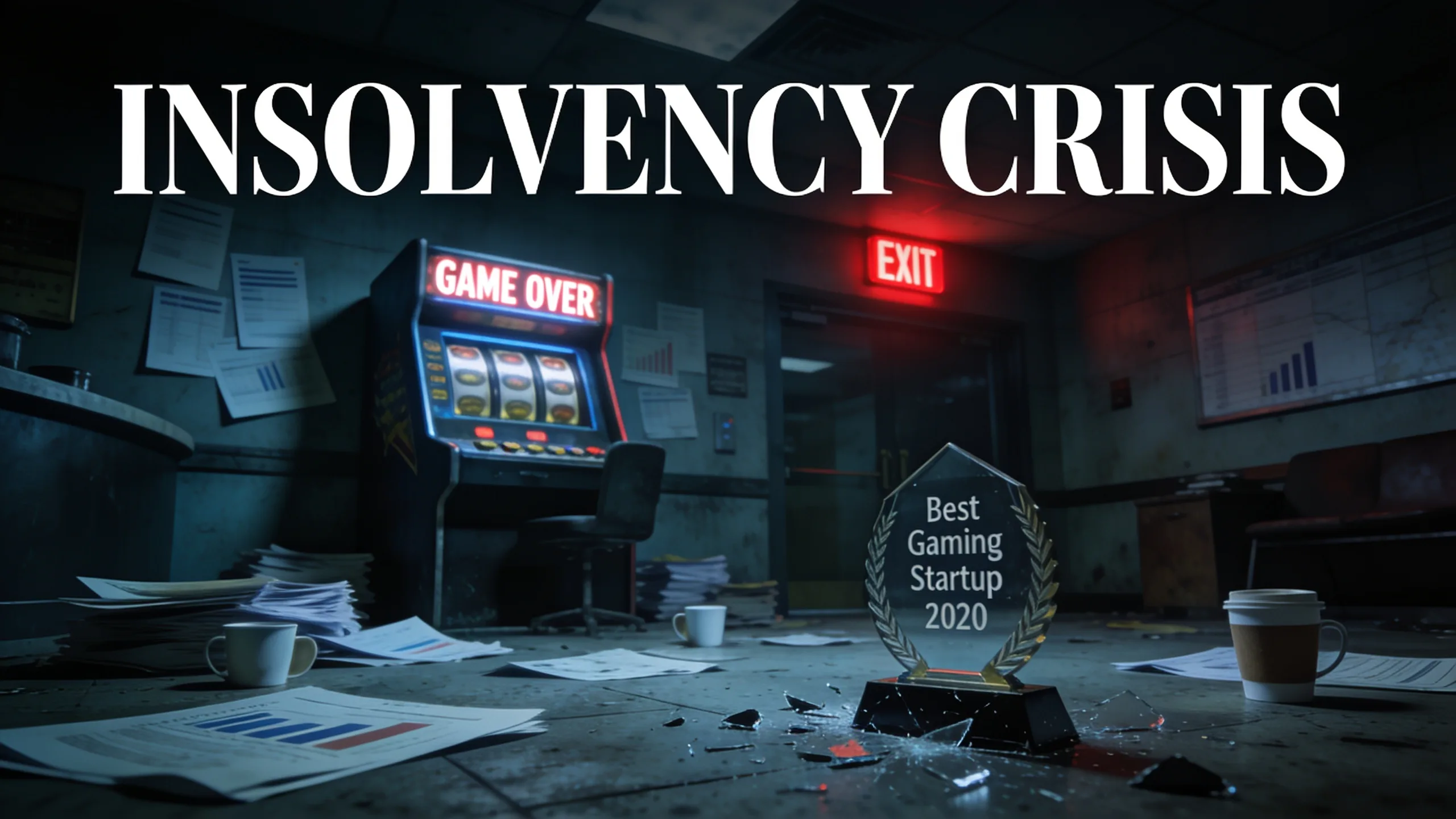
India's once-booming real-money gaming (RMG) sector has moved from regulatory limbo to commercial collapse. The Promotion and Regulation of Online Gaming Act (PROGA) came into force on May 1, 2026, criminalising the offering, advertising and payment-facilitation of any online money game — whether based on skill or chance. Weeks later, on May 27, 2026, the Supreme Court closed off the industry's last legal defences in two companion rulings, validating retrospective 28% GST demands that together total close to ₹2.5 lakh crore.
The combined effect has been swift. Major platforms including Dream11, MPL, PokerBaazi and Zupee suspended real-money operations, and more than 3,000 jobs have already gone. Lawyers now warn of a wave of insolvency filings at the National Company Law Tribunal (NCLT) as tax demands that exceed many operators' lifetime revenues become enforceable. For India's estimated 220 million online bettors, the practical result has been a steady migration toward offshore platforms the government cannot easily reach.
Contents
How the ban took hold
PROGA received presidential assent in August 2025 and was notified on April 22, 2026, taking effect on May 1. The law draws no line between games of skill and games of chance: any game played for stakes in expectation of a monetary return is prohibited. Offering or facilitating such a game carries imprisonment of up to three years and fines of up to ₹1 crore; advertising carries up to two years and ₹50 lakh.
Enforcement runs largely through the financial system. A new regulator, the Online Gaming Authority of India (OGAI), classifies games and can direct banks and payment processors to block transactions to non-compliant platforms — turning intermediaries into compliance gatekeepers with personal liability attached.
The ₹2.5 lakh crore GST blow
The deeper financial damage came from tax. In State of Tamil Nadu v. Junglee Games India (2026 INSC 594), a bench of Justices J B Pardiwala and R Mahadevan held that staking money on uncertain outcomes is betting and gambling regardless of any skill element, stripping operators of constitutional protection under Article 19. A companion judgment upheld the 28% GST levied on the full face value of player deposits — and applied it retrospectively.
The validated demands total roughly ₹2.5 lakh crore, a figure that in many cases far exceeds the historic revenues of the companies receiving them. Because most operators earned only a thin platform commission rather than the full pooled stake, the liabilities are, in the words of tax counsel, commercially unsustainable.
What it means for operators
With recovery proceedings — including bank-account attachment and asset seizure — now available to GST authorities once appeals are exhausted, several operators are expected to seek insolvency or restructuring at the NCLT. The survivors are pivoting hard: Dream Sports has reorganised around 11 portfolio companies spanning free-to-play sport, AI analytics and fintech, while Flutter Entertainment wound down its Junglee Games RMG business in India and absorbed the loss into its global operations.
| Operator | Former core | Status after the ban |
|---|---|---|
| Dream11 (Dream Sports) | Fantasy sports | RMG halted; pivot to fintech (Dream Money), AI and free-to-play |
| Mobile Premier League | RMG & fantasy | Cash contests suspended |
| Head Digital Works (A23) | Rummy | Led PROGA challenge; heavy GST exposure |
| Gameskraft | Rummy & poker | Lead respondent in the GST batch |
| Junglee Games (Flutter) | Rummy & fantasy | India RMG wound down; about 350 layoffs |
Where the bettors went
Enforcement has redirected demand more than it has curbed it. The government has blocked roughly 8,400 betting and gambling URLs — about 4,900 of them after PROGA — and MeitY has warned VPN providers against enabling access to blocked sites. Yet consumer surveys cited in Parliament point to rising offshore usage since the ban, with players reaching mirror domains and routing payments through UPI.
The enforcement net extends to promoters. The Enforcement Directorate has pursued celebrity endorsers of the offshore brand 1xBet, attaching assets worth ₹11.14 crore tied to former cricketers in a money-laundering probe — a signal that liability now reaches well beyond the operators themselves.
Sources
Primary legal coverage and official-rule reporting first, followed by trade and policy analysis used to verify figures and timeline.
- Bar & Bench — All in: the online real money gaming industry goes bust ↗ https://www.barandbench.com/columns/all-in-the-online-real-money-gaming-industry-goes-bust
- iGaming Business — India publishes new online gaming regulations ↗ https://igamingbusiness.com/legal-compliance/regulation/india-publish-new-online-gaming-regulations/
- Republic World — Retrospective GST on online gaming explained ↗ https://www.republicworld.com/business/retrospective-gst-online-gaming-supreme-court-impact-2026-05-29-126140
- Outlook Respawn — The legal battle that dismantled India's RMG sector ↗ https://respawn.outlookindia.com/gaming/gaming-originals/the-legal-battle-that-dismantled-indias-real-money-gaming-sector
- Inc42 — Real money gaming's GST soup: recovery and insolvency risk ↗ https://inc42.com/features/real-money-gamings-gst-soup-beating-a-dead-horse/
- MediaNama — India blocks 8,376 gambling URLs (MeitY data) ↗ https://www.medianama.com/2026/04/223-india-blocks-8376-gambling-websites-meity-data/
Every smartphone has become a virtual common gambling house.
— Justices J B Pardiwala & R Mahadevan, Supreme Court of India · State of Tamil Nadu v. Junglee Games (2026 INSC 594), May 27, 2026