
Pennsylvania iGaming Crackdown: State Report Targets Credit Cards, VIP Programs and Live Betting
A bipartisan HR 60 report and parallel PGCB rulemaking put Pennsylvania's $7.7bn online gambling market on notice as addiction concern mounts.
Category: News · By Growl Games Editorial Team · Thu Jul 16 2026 · Updated Tue Jul 21 2026
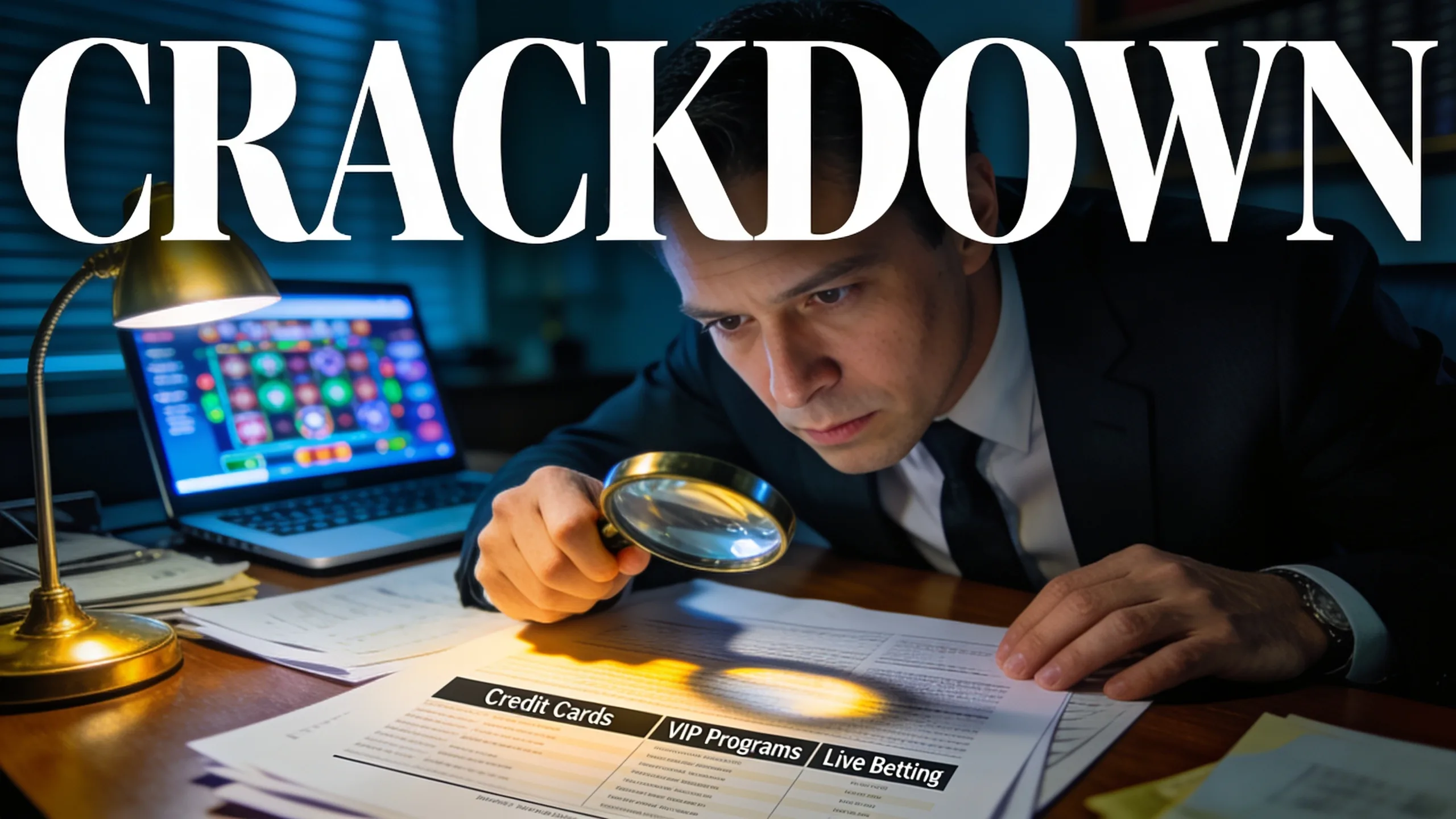
Pennsylvania's online gambling market generated a record $7.70 billion in commercial gaming revenue in 2025 — its fifth consecutive all-time high, with iGaming surpassing land-based casinos in annual revenue for the first time ever. But on 13 July 2026, the state's bipartisan Joint State Government Commission (JSG Commission) published a landmark report warning that growth may be masking a worsening public health crisis.
The study, commissioned under House Resolution No. 60, found that more than one in four Pennsylvania adults may be at risk of developing a gambling disorder — a figure that medical organisations say runs at more than twice the national average. The report arrives alongside a separate package of proposed regulatory amendments from the Pennsylvania Gaming Control Board (PGCB), creating a two-front push to tighten consumer protections across both the legislative and regulatory tracks.
In This Article
What the HR 60 Report Says
The JSG Commission's Sports Betting and Related Interactive Gambling in Pennsylvania report, overseen by the commission's assistant general counsel, draws on multiple studies linking expanded online gambling to rising debt levels, domestic violence incidents, harassment of college athletes, and increased mental health and suicide instances among affected residents.
Critically, it flags that a small group of high-risk players may be generating a disproportionate share of operator revenue — citing parallel research from Connecticut, Great Britain, and internal financial records from sportsbook operator PointsBet. Pennsylvania-specific data to confirm this pattern does not yet exist, the report notes. Key legislative recommendations include:
- Banning the use of credit cards for online gambling deposits
- Requiring mandatory pre-session spending and time limits
- Prohibiting AI-generated personalised marketing and promotional offers
- Banning live, in-play sports betting on grounds of impulsive wagering risk
- Ending or sharply curtailing VIP loyalty programs
- Blocking push notifications to logged-out users
- Replacing the term "problem gambling" with the clinical designation gambling disorder
PGCB's Parallel Rulemaking
Separately, and prior to the JSG Commission's report, the PGCB submitted proposed regulatory amendments for public comment. Chair Denise J. Smyler's board framed the changes as clarifying "further expectations for licensees" on compulsive and problem gambling programs. The PGCB proposals — focused more on iGaming than sportsbooks — include:
- Expanded player-facing limit-setting tools (losses, session length, deposit frequency)
- Account suspension options of up to one year at the player's request
- Monthly operator reports on self-limiting and self-exclusion activity
- Banning ads that use "free" or "risk-free" language where a financial stake is still required
- Prohibiting marketing to self-excluded players
- Restricting ads where a majority of the audience is under 21
The JSG Commission report noted that even if none of its own legislative recommendations advance, the PGCB's regulatory track "would likely advance its efforts to address this problem as well."
Two Paths: Immediate Curbs vs. Data-First
Rather than prescribing a single course of action, the JSG Commission explicitly presents two strategies for lawmakers, acknowledging a direct trade-off between speed of protection and preservation of tax revenue.
The immediate restrictions path would implement the hard bans above — credit cards, in-play betting, VIP programs — accepting the likelihood that operator revenues, and therefore state tax receipts, would fall in the near term. The data-first path would require operators to share anonymised player data with researchers, allowing regulators to build targeted interventions that protect at-risk bettors without broad restrictions on the wider market. The commission is candid that the faster route "would protect gamblers but diminish revenue less precisely."
How Pennsylvania Compares to Other States
| State | Key 2026 Consumer Protection Move | Effective / Status | Credit Card Ban? |
|---|---|---|---|
| Pennsylvania | JSG Commission report + PGCB proposed rulemaking (HR 60) | Public comment / pending legislation | Proposed |
| Colorado | Gov. Polis signed omnibus bettor-protection bill; bans push notifications & "bonus bet" language | Signed June 2026 | Yes — first US state |
| New York | Legislature passed monthly account-statement requirement for sportsbook users | Passed June 2026 | No |
| New Jersey | Bill S2356 directs DGE to study ad language; S2160 targets microbetting ban | Introduced 2026 | No |
What It Means for Operators and Bettors
For operators active in Pennsylvania — including FanDuel, DraftKings, BetMGM, Caesars, bet365, and BetRivers — the dual-track pressure is significant. Pennsylvania already levies a 36% tax rate on gross gaming revenue, among the highest in the US; any revenue impact from new restrictions would be amplified by that rate structure. FanDuel moved proactively in February 2026, voluntarily stopping credit card deposits across both its sportsbook and casino platforms in the state ahead of any mandate.
For bettors, the immediate practical implication depends on which path the legislature favours. A rapid restrictions package could end in-play wagering and VIP reward structures that many players rely on for enhanced value. The data-first route keeps those products intact in the short term but creates a framework for more precisely targeted interventions that could eventually affect high-frequency users most. Either way, the days of Pennsylvania's online gambling market operating under its post-legalisation light-touch regime appear to be numbered.
State Senator Wayne Fontana had already introduced standalone credit-card-ban legislation before the JSG Commission published its report. That bill is now expected to gain momentum as the wider debate moves into committee hearings later in 2026.
Sources
Primary sources are listed first. All links were verified as of 16 July 2026.
- Pennsylvania JSG Commission — Sports Betting and Related Interactive Gambling in Pennsylvania (HR 60 Report) ↗ https://jsg.legis.state.pa.us/resources/documents/ftp/publications/2026-07-13%20WEB%20(HR60)%20Sports%20Betting%20REPORT%207.14.26.pdf
- Pennsylvania Gaming Control Board — Proposed Rulemaking, PA Bulletin Vol. 56, No. 28 ↗ https://www.pacodeandbulletin.gov/secure/pabulletin/data/vol56/56-28/56_28_prm.pdf
- SBC Americas — Pennsylvania legislators, regulators say it's time for more gambling rules ↗ https://sbcamericas.com/2026/07/15/pennsylvania-suggested-gambling-rules/
- iGaming Today — Pennsylvania Weighs Gambling Crackdown as Addiction Report Challenges State's Revenue Model ↗ https://www.igamingtoday.com/pennsylvania-weighs-gambling-crackdown-as-addiction-report-challenges-states-revenue-model/
- American Gaming Association — State of the States 2026 ↗ https://www.americangaming.org/resources/state-of-the-states-2026/
- Pennsylvania Gaming Control Board — Press Releases ↗ https://gamingcontrolboard.pa.gov/news-and-transparency/press-release
The General Assembly can enact any number of amendments to address problem gambling — one of the proposals would not have an immediate impact but would likely lead to further amendments.
— Pennsylvania Joint State Government Commission, Sports Betting and Related Interactive Gambling in Pennsylvania · HR 60 Report, 13 July 2026