
Lords Demand UK Gambling Advertising Ban in Landmark 2026 Report
A cross-party Lords committee calls for banning all UK gambling ads on TV, online and in sport, citing up to 1.5 million problem gamblers and 66 new recommendations.
Category: News · By Growl Games Editorial Team · Tue Sep 22 2026 · Updated Tue Sep 22 2026
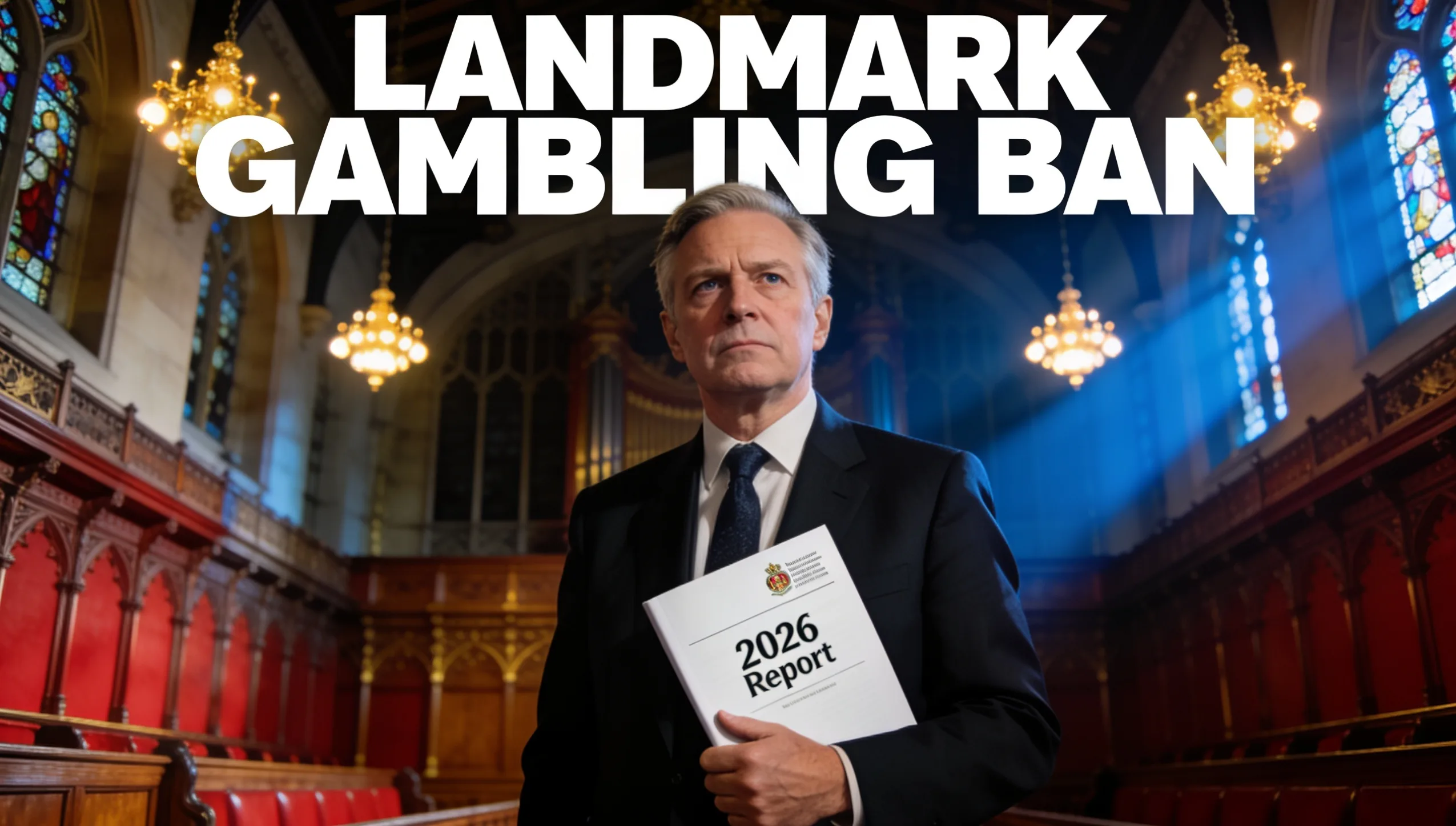
The House of Lords Liaison Committee published a landmark 173-page report on 17 September 2026 calling for a comprehensive ban on gambling advertising across the UK — covering television, online, and sports sponsorship. The report, Gambling Harm — Time for Action (HL Paper 52), estimates that between 1 million and 1.5 million adults in Great Britain currently experience problem gambling, and concludes that restricting advertising is the single most effective lever available to government.
The cross-party committee delivers 66 recommendations in total, but the advertising ban carries the most immediate weight for operators and bettors alike. If adopted by the Department for Culture, Media and Sport (DCMS), it would reverse the liberalisation of gambling marketing introduced by the Gambling Act 2005 and fundamentally reshape how licensed sportsbooks and casinos reach UK customers.
Table of Contents
The Gambling Advertising Ban Report
The Liaison Committee's report is a formal follow-up to a July 2020 inquiry by the Select Committee on the Social and Economic Impact of the Gambling Industry, which had already called for a public health approach to gambling harm. The new document, designated HL Paper 52 of Session 2026–27, concludes that government action since 2020 has been insufficient and that bolder intervention is now warranted.
The committee documents a range of harms associated with problem gambling: relationship breakdown, financial distress, concealing gambling from family members, and at the extreme end, mental ill health and suicide. It singles out digital and social media advertising as a growing concern, noting that online content marketing can blur the line between editorial material and paid promotion and is particularly effective at reaching children and younger adults.
What the Ban Would Cover
The committee's recommendation is deliberately broad. It does not propose a partial restriction or a watershed rule — it calls for a comprehensive gambling advertising ban as soon as practicable, covering:
- Television and radio broadcast advertising
- Online and social media advertising
- Gambling sponsorship in sport — including shirt sponsorships, pitch-side boards, and stadium naming rights
- Digital content marketing and influencer partnerships
The proposed scope would largely mirror the pre-2005 regulatory framework, under which TV and radio gambling ads were only permitted for a narrow category of products including bingo, football pools, and permitted lotteries.
| Advertising Channel | Current Status (Gambling Act 2005) | If Lords Recommendation Adopted |
|---|---|---|
| TV & Radio | Broadly permitted with watershed rules | Banned |
| Online / Social Media | Permitted with targeting restrictions | Banned |
| Sports Shirt Sponsorship | Permitted | Banned |
| Stadium & Pitch-side Ads | Permitted | Banned |
| Bingo / Pools / Lotteries | Permitted (legacy exemption) | Under review |
Operator and Market Impact
A full advertising ban of this scope would constitute the most significant structural change to UK gambling marketing since the Gambling Act 2005 came into force. For licensed sportsbooks and casinos, advertising and sponsorship are the primary customer acquisition channels in a saturated market. Removing them would compress margins and favour operators with large existing customer bases, strong loyalty programmes, and direct-to-consumer products that do not depend on paid reach.
Sports most exposed to a sponsorship prohibition include football, rugby league, snooker, darts, and boxing — all of which rely heavily on gambling partnership revenue. Premier League clubs alone hold multi-million-pound front-of-shirt deals with licensed operators.
The committee explicitly addresses the industry's main counter-argument — that a ban would push bettors toward unlicensed offshore operators. It acknowledges the displacement risk but concludes that stronger enforcement against illegal gambling operators must accompany any advertising restriction, rather than being used as a reason to avoid one.
Industry Pushback
The Betting and Gaming Council (BGC), which represents major licensed operators, rejected the report's conclusions in strong terms. BGC Chief Executive Grainne Hurst called it "deeply misguided," warning that a blanket ban would strip licensed operators of a key competitive advantage over illegal platforms while doing nothing to deter criminal gambling targeting British consumers.
The BGC argued the committee was "willing to dismiss the rapidly growing threat from the criminal gambling market simply because it does not fit its conclusions." The committee, however, was unmoved by the displacement argument, describing the risk as overstated relative to the documented public health case for acting.
What Happens Next
The report is a parliamentary recommendation, not legislation. The government is not legally required to respond, but Lords committee reports of this weight typically prompt a formal written government response within 60 days. The DCMS has already signalled interest in tightening gambling marketing rules in 2026 — including plans to remove the “aim to permit” provision in the Gambling Act to address the concentration of betting shops on British high streets — placing the political direction broadly in line with the committee's findings.
For operators and affiliates in the UK market, the report significantly raises the probability of meaningful advertising restrictions within the next legislative cycle. Whether the government adopts a full ban or a more targeted version — such as a sport-sponsorship-only prohibition or tighter digital targeting rules — is now the central question to monitor.
Sources
Primary and secondary sources verified and used in this article, listed in order of authority.
- UK Parliament — Comprehensive ban on gambling advertising recommended by new Lords report ↗ https://committees.parliament.uk/committee/187/liaison-committee-lords/news/217932/comprehensive-ban-on-gambling-advertising-recommended-by-new-lords-report/
- Yogonet International — Lords Liaison Committee calls for UK gambling ad ban ↗ https://www.yogonet.com/international/news/2026/09/17/126441-house-of-lords-liaison-committee-calls-for-uk-gambling-ad-ban-citing-up-to-15m-problem-gamblers
- iGaming Business — House of Lords committee urges near-total ban on gambling advertising ↗ https://igamingbusiness.com/marketing-affiliates/house-of-lords-urges-near-total-ban-gambling-advertising-public-health-crisis/
- Gambling Insider — UK Report Calls for Ban on Gambling Ads ↗ https://www.gamblinginsider.com/news/195535/uk-gambling-advertising-ban-house-of-lords-report
- SBC News — Lords make case for full UK gambling advertising crackdown ↗ https://sbcnews.co.uk/features/2026/09/17/lords-gambling-ad-ban
- GamblingNews — UK Illegal Gambling Taskforce Responsibilities ↗ https://www.gamblingnews.com/news/uk-unveils-details-about-the-responsibilities-of-its-illegal-gambling-taskforce/
A blanket advertising ban would remove a key competitive advantage of being licensed and regulated while doing nothing to stop illegal operators targeting British consumers.
— Grainne Hurst, Chief Executive, Betting and Gaming Council · Response to HL Paper 52, September 2026