
Kalshi Loses Ninth Circuit Appeal as States Crack Down on Prediction Markets
A 3–0 federal ruling hands Nevada a landmark win over sports event contracts, sending Kalshi and Robinhood scrambling toward the Supreme Court and triggering multi-state enforcement.
Category: News · By Growl Games Editorial Team · Mon Sep 14 2026 · Updated Mon Sep 14 2026
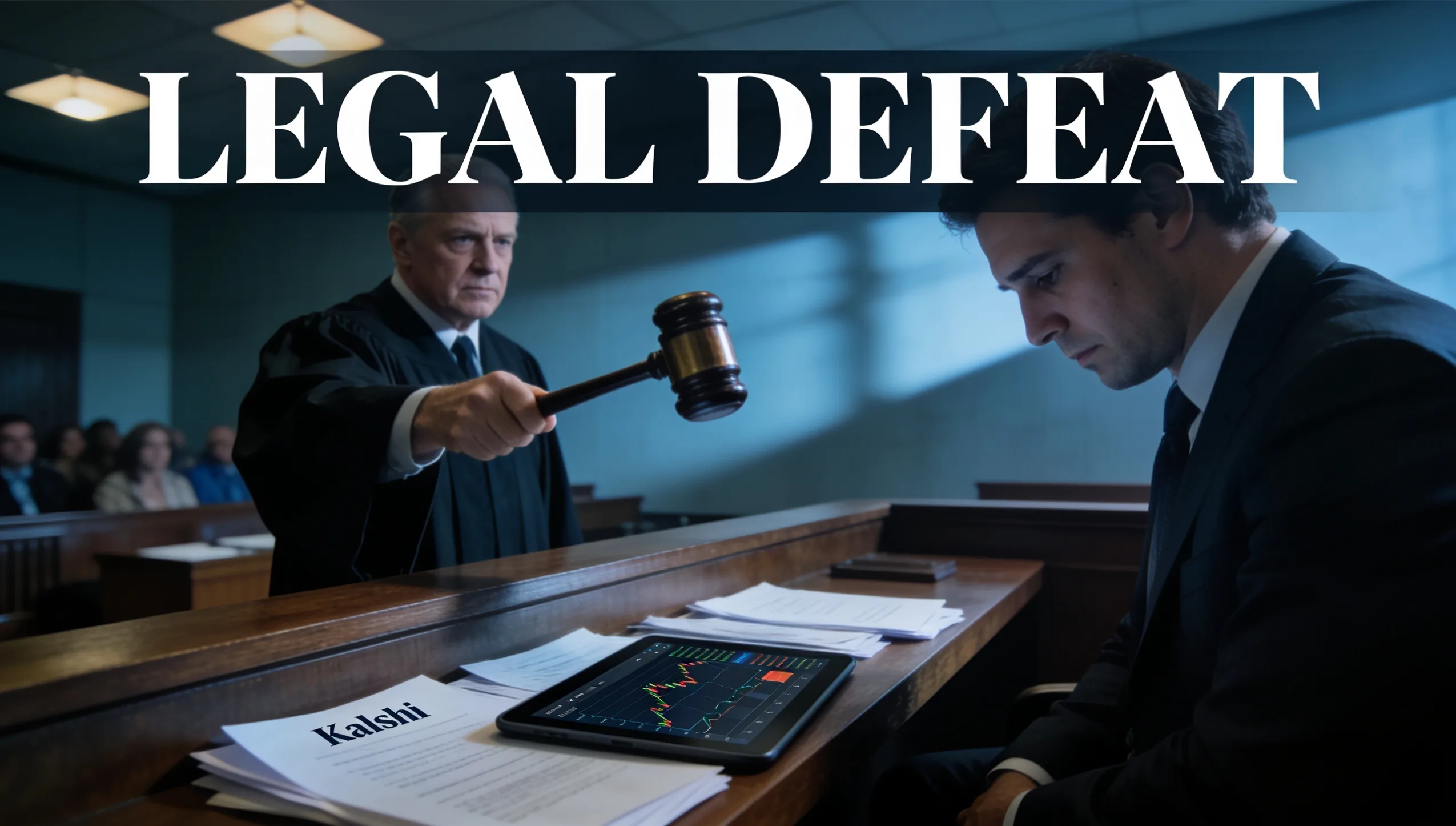
The 9th U.S. Circuit Court of Appeals handed the prediction markets industry a significant setback on August 28, 2026, ruling 3–0 that Nevada can enforce its gaming laws against Kalshi, Robinhood Derivatives, and Crypto.com — rejecting their core argument that federal commodity law shields their sports event contracts from state oversight. The decision in Case No. 25-7516 directly threatens the business model of every federally registered prediction market operating in states with active gaming regulators.
Within days, the industry fired back on two fronts. Kalshi petitioned the full Ninth Circuit for an en banc rehearing, while Robinhood on September 9, 2026 filed a writ of certiorari asking the U.S. Supreme Court to intervene. Meanwhile, Michigan secured a court-ordered agreement forcing Robinhood to stop accepting new sports contracts from Michigan customers by September 9 and to close all outstanding positions by October 9 — a template other states may quickly follow.
Table of Contents
The Ninth Circuit Ruling
Writing for the panel, Judge Ryan Nelson affirmed that U.S. District Judge Andrew Gordon was correct to deny Kalshi an injunction against the Nevada Gaming Control Board. The court found that Kalshi's sports contracts likely do not qualify as "swaps" under the Commodity Exchange Act (CEA) — the legal hook the company needed to claim exclusive federal jurisdiction and block state enforcement.
The panel's reasoning was pointed: Kalshi's products "create new risk for ordinary consumers" rather than hedge existing financial exposure, placing them outside the swap definition that grants the CFTC exclusive regulatory authority. Judge Kenneth Lee wrote a concurrent opinion. Nevada's attorney characterised the companies' position as "a severe intrusion on state sovereignty."
Kalshi has since argued the panel leaned heavily on CFTC rules that are now being superseded by the agency's June 10, 2026 proposed rulemaking under amended Rule 40.11, making the panel's core reasoning "moot" once a final rule takes effect.
Industry Response: En Banc and SCOTUS
Kalshi moved quickly after the ruling, filing a petition for en banc rehearing asking all active Ninth Circuit judges to reconsider the three-judge panel's decision. The company argues the ruling "creates a circuit split on an exceptionally important question of federal preemption" that conflicts with the plain text of the CEA.
The odds are steep. Gaming attorney Daniel Wallach noted the Ninth Circuit granted only 1.5% of en banc requests in FY 2025 — approving just 11 of 730 petitions filed. Robinhood chose a different route: its certiorari petition, filed September 9, asks the Supreme Court to take up the case directly. Neither outcome is guaranteed, but the deepening circuit split gives both filings more force than usual.
State-by-State Crackdowns
The Ninth Circuit ruling has emboldened gaming regulators across the country. As of early September 2026, the enforcement map looks like this:
- Nevada: Kalshi, Robinhood, and Crypto.com all barred from offering sports event contracts pending full litigation resolution.
- Michigan: Court-approved agreement requires Robinhood to halt new sports contracts by September 9 and wind down existing positions by October 9; Sixth Circuit appeal pending.
- Utah: The Tenth Circuit has already ruled against Kalshi in a separate action.
- New Jersey: Filed its own Supreme Court petition on September 2, 2026, arguing companies cannot repackage sports betting as federally protected derivatives.
- Iowa & Mississippi: Both states have moved to restrict prediction market and sweepstakes operators under existing gaming statutes.
The Circuit Split Problem
Federal appellate courts are now divided — a situation that significantly raises the likelihood of Supreme Court review. The Third Circuit ruled in April 2026 in Kalshi's favour in a parallel case against New Jersey, finding sports event contracts can qualify as swaps and that federal law preempts state regulation. The Ninth Circuit reached the opposite conclusion. The Sixth Circuit has not yet ruled on Michigan, and the Tenth Circuit sided with Utah.
| Circuit | State | Ruling | Current Status |
|---|---|---|---|
| 3rd Circuit | New Jersey | Federal law preempts — Kalshi wins | NJ filing SCOTUS petition |
| 9th Circuit | Nevada | State authority upheld — Kalshi loses | En banc petition pending |
| 10th Circuit | Utah | State authority upheld — Kalshi loses | Final |
| 6th Circuit | Michigan | Pending | Robinhood operating under court agreement |
If the Supreme Court grants either Robinhood's cert petition or New Jersey's petition, a nationwide resolution — one way or the other — could arrive as early as 2027.
What This Means for Operators and Bettors
For licensed US sportsbook operators, the near-term picture is broadly positive: every prediction market forced out of a state leaves regulated sports betting as the only legal outlet for event-outcome wagers. But a Supreme Court ruling that federal commodity law preempts state authority could ultimately legitimise a new class of competitor operating outside traditional gaming licensing frameworks entirely.
For bettors in Nevada, Michigan, and Utah, sports prediction market access has already been curtailed. Robinhood customers in Michigan who held open positions face forced closure by October 9. Users in unaffected states remain able to trade for now, but should expect further disruption as additional states likely adopt Nevada's enforcement template while the courts deliberate.
The CFTC's pending rulemaking — comment period closed July 27, 2026 — is the wildcard. If the agency's final rule under Rule 40.11 explicitly authorises sports event contracts on designated contract markets, Kalshi's "moot" argument gains real traction in every pending appeal. The timing of that final rule could matter as much as any court decision.
Sources
Primary and secondary sources used in the reporting of this article, ordered by authority.
- The Nevada Independent — Federal appeals court allows Nevada to ban Kalshi and other prediction markets ↗ https://thenevadaindependent.com/article/federal-appeals-court-allows-nevada-to-ban-kalshi-and-other-prediction-markets
- Sports Betting Dime — Kalshi Files En Banc, Robinhood Petitions SCOTUS ↗ https://www.sportsbettingdime.com/news/industry/kalshi-files-for-ninth-circuit-en-banc-hearing-while-robinhood-requests-cert-petition-with-scotus/
- DeFi Rate — Kalshi Seeks Ninth Circuit Rehearing; Robinhood Takes Fight to Supreme Court ↗ https://defirate.com/news/kalshi-ninth-circuit-rehearing-robinhood-nevada-prediction-market-supreme-court/
- Greenberg Traurig — CFTC Proposes New Rules for Event Contracts on Prediction Markets ↗ https://www.gtlaw.com/en/insights/2026/6/cftc-proposes-new-rules-for-events-contracts-on-prediction-markets
- GamblingNews — Robinhood Pulls Sports Prediction Contracts from Michigan ↗ https://www.gamblingnews.com/news/robinhood-pulls-sports-prediction-contracts-from-michigan/
Because we disagree with Kalshi's overly broad reading of the CEA, we affirm the district court's order.
— Judge Ryan Nelson, 9th U.S. Circuit Court of Appeals · Case No. 25-7516, August 28, 2026