
India's PROGA Ban Creates $15B Offshore Gaming Black Market
The May 2026 real-money gaming ban and a simultaneous Supreme Court GST ruling have together dismantled India's regulated iGaming sector, pushing millions of bettors to illegal offshore platforms.
Category: News · By Growl Games Editorial Team · Fri Jul 24 2026 · Updated Fri Jul 24 2026
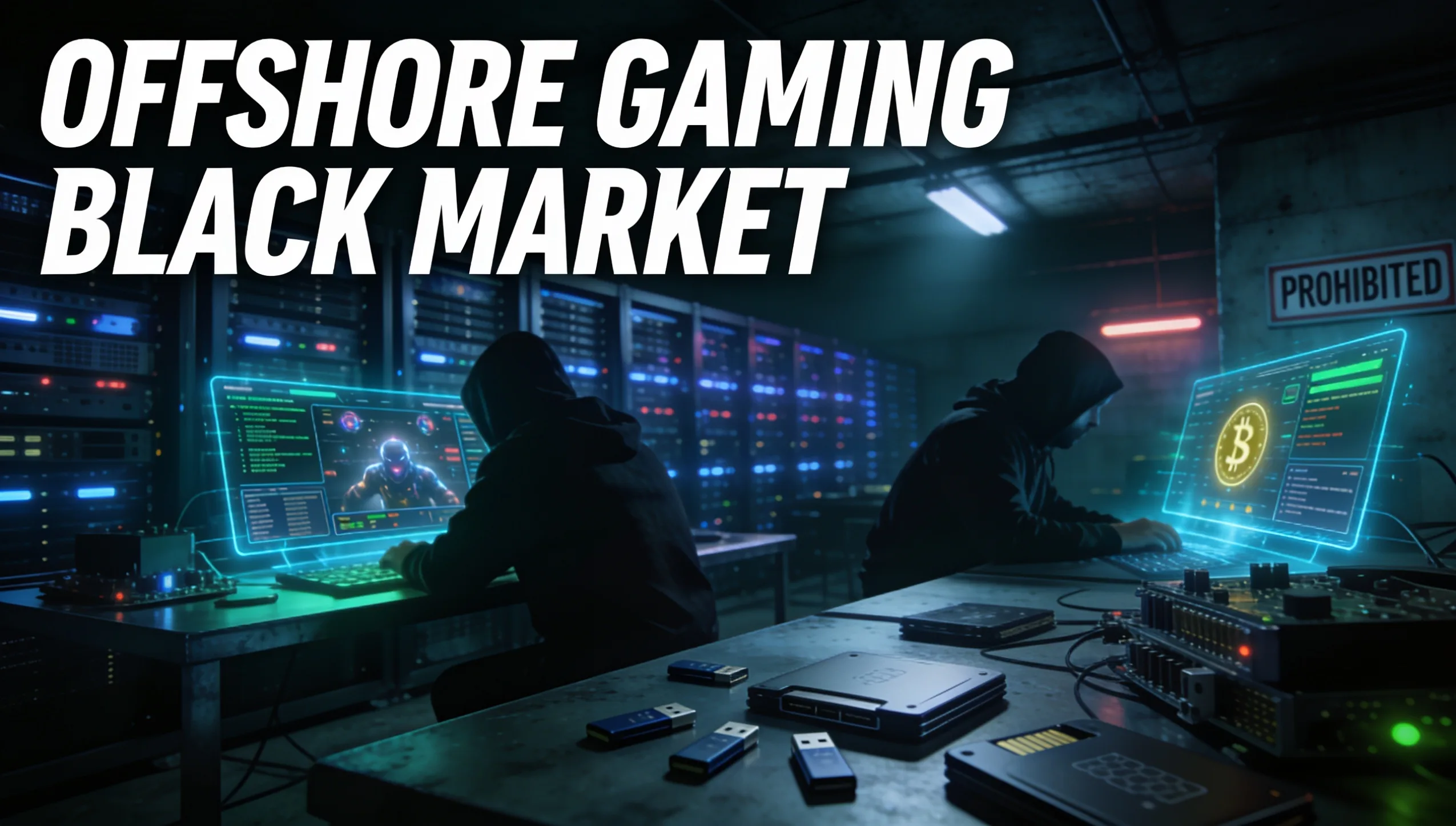
India's real-money gaming industry has been dismantled by a two-part legal assault. The Promotion and Regulation of Online Gaming Act, 2025 (PROGA) took full effect on 1 May 2026, banning all online money games nationwide. Then, on 27 May 2026, the Supreme Court upheld retrospective GST demands exceeding ₹1 lakh crore (approximately $12 billion USD) against the country's leading gaming platforms — leaving an industry that no longer has a legal product now facing a tax bill it cannot pay.
The combined effect has wiped out a sector that, just two years ago, counted 450 million registered users. Dream11 reported a 95% revenue collapse after transitioning to free-to-play. More than 3,000 direct jobs have been cut across Dream11, Games24x7, Mobile Premier League, WinZO, and others. Meanwhile, the vacuum left by the ban has fuelled an illegal offshore market estimated to exceed $15 billion in 2026.
Table of Contents
PROGA: What the Law Actually Does
The Promotion and Regulation of Online Gaming Rules, 2026 were notified by the Ministry of Electronics and Information Technology (MeitY) on 22 April 2026 and came into force on 1 May 2026. The law abandons decades of "skill vs. chance" legal distinction — any game requiring a monetary deposit is now classified as an Online Money Game (OMG) and is banned outright.
Penalties under the Act are substantial:
- Operating, facilitating, or advertising real-money games: fines up to ₹1 crore plus up to 3 years imprisonment
- Banks, UPI providers, and payment gateways are legally prohibited from processing transactions for prohibited formats
- Government can execute near-instantaneous platform removals under Section 69A of the IT Act, 2000, without a court order
Esports is explicitly exempted, recognised as a legitimate sporting discipline under the National Sports Governance Act, 2025. Social and casual gaming continue under a lighter framework via the newly created Online Gaming Authority of India (OGAI).
The Supreme Court GST Ruling
Three weeks after the ban took effect, the tax dimension arrived. On 27 May 2026, a bench of Justices J.B. Pardiwala and R. Mahadevan ruled in Directorate General of GST Intelligence v. Gameskraft Technologies that 28% GST applies to the full face value of player deposits, not merely the platform commission of 5–15% that operators had been remitting.
The ruling reversed a Karnataka High Court decision that had previously quashed a ₹21,000 crore notice against Gameskraft, and validated 91 show-cause notices issued since 2022 across the sector. Industry estimates place total GST liabilities at ₹1.44 lakh crore — a bill that falls on companies already stripped of their revenue by PROGA.
Offshore Black Market Surges After India Gaming Ban
Rather than eliminating gambling, the PROGA ban has accelerated migration to unregulated platforms. A December 2025 CUTS International survey found offshore platform usage among Delhi NCR respondents rose from 68.3% pre-ban to 82% post-ban — a relative increase of more than 20%. In Maharashtra, the figure reached 91.7%.
MeitY has blocked more than 8,400 URLs linked to illegal betting and gambling since PROGA was enacted, yet offshore operators continue to attract hundreds of thousands of monthly Indian visitors through mirror sites, VPN access, and promotion via Telegram and Instagram private channels. Common evasion tactics include URL switching, fake UPI IDs, and mule bank accounts to move funds offshore.
| Metric | Pre-Ban (Before May 2026) | Post-Ban (Mid-2026) |
|---|---|---|
| Offshore platform usage (Delhi NCR) | 68.3% | 82%+ |
| Illegal market size (est.) | ~$8B annually | $15B+ projected for 2026 |
| Illegal URLs blocked by MeitY | ~3,500 | 8,400+ |
| Dream11 revenue | Full real-money operations | ~95% decline (free-to-play only) |
| Annual GST losses (shadow market est.) | Minimal | ~$2.5B (All India Gaming Federation) |
Operator and Bettor Fallout
The platforms that built India's gaming industry are now restructuring or winding down their core products. Dream11, MPL, Games24x7, WinZO, Baazi Games, PokerBaazi, and Zupee have all suspended real-money operations. The sector estimates more than 200,000 indirect jobs have been affected across development, marketing, and the broader esports supply chain.
For bettors who have migrated offshore, the risks are considerable: fraud, frozen withdrawals, data theft, and no legal recourse under Indian law. There is no statutory obligation for banned platforms to escrow or return existing user deposits — a gap that has left millions of players without a formal refund mechanism.
Constitutional Challenges and What Comes Next
Dream11, Games24x7, and WinZO have filed consolidated Supreme Court petitions challenging PROGA's constitutionality under Article 14 (right to equality) and Article 19(1)(g) (freedom of trade). A core jurisdictional argument holds that betting and gambling traditionally fall under State List Entry 34, questioning whether Parliament had the legislative competence to impose a blanket central ban.
Legal analysts identify several structural gaps that will require legislative attention regardless of how the constitutional challenges resolve:
- No regulatory sandbox for developers to obtain binding pre-launch game classifications
- Undefined treatment of loot boxes, NFTs, and hybrid monetisation models
- Financial provisions that cannot reach cryptocurrency-based offshore payment channels
- No fast-track specialised tribunal for high-volume gaming disputes
- No mandatory escrow or ring-fencing of existing user deposits on banned platforms
Sources
Primary and secondary sources consulted for this article, in order of citation.
- PCA Legal — India’s New Online Gaming Laws, 2026: A Legal Analysis ↗ https://pcalegal.com/indias-new-online-gaming-laws-2026-a-legal-analysis/
- Entrackr — Gaming Firms Face Over Rs 1 Lakh Cr Tax Blow as Supreme Court Backs 28% GST ↗ https://entrackr.com/news/gaming-firms-to-face-over-rs-1-lakh-cr-tax-blow-as-supreme-court-backs-28-gst-11880150
- Outlook Respawn — The Legal Battle That Dismantled India’s Real-Money Gaming Sector ↗ https://respawn.outlookindia.com/gaming/gaming-originals/the-legal-battle-that-dismantled-indias-real-money-gaming-sector
- Whalesbook — India Gaming Ban Fuels $15B Offshore Black Market ↗ https://www.whalesbook.com/news/English/lawcourt/India-Gaming-Ban-Fuels-dollar15B-Offshore-Black-Market/69c3cc4349d6b264f25c000c
- MediaNama — India Blocks 242 More Gambling Sites, Offshore Use Still Rising ↗ https://www.medianama.com/2026/01/223-india-blocks-242-gambling-sites-total-above-7800/
- iGaming Business — Government of India Publishes New Online Gaming Regulations ↗ https://igamingbusiness.com/legal-compliance/regulation/india-publish-new-online-gaming-regulations/
Once money is staked on a game, the distinction between ‘game of skill’ and ‘game of chance’ becomes irrelevant for GST purposes.
— Justices J.B. Pardiwala & R. Mahadevan, Supreme Court of India · Directorate General of GST Intelligence v. Gameskraft Technologies, 27 May 2026