
India Supreme Court to Hear Final PROGA Challenge
India's apex court agrees to a final hearing on petitions challenging the PROGA real-money gaming ban, setting up a constitutional verdict that could reshape the country's $1 billion online gaming market.
Category: News · By Growl Games Editorial Team · Thu Aug 20 2026 · Updated Thu Aug 20 2026
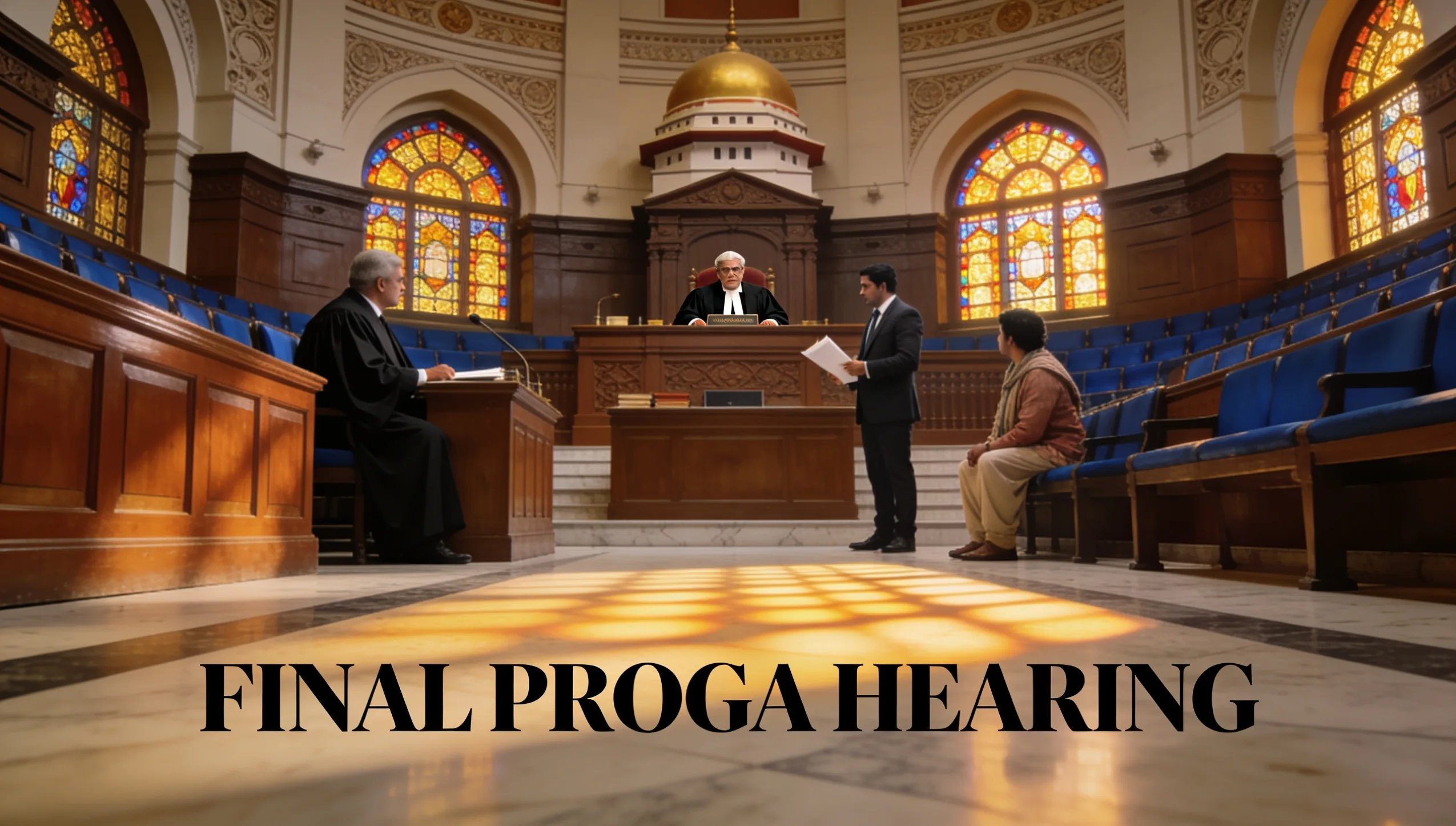
India's Supreme Court took a landmark step on 5 August 2026, agreeing to accord a final hearing to the batch of petitions challenging the Promotion and Regulation of Online Gaming Act (PROGA) — the law that imposed a blanket nationwide ban on all online real-money games (ORMGs) when it came into force on 1 May 2026. A bench led by Chief Justice Surya Kant and Justice Joymalya Bagchi directed all parties, including Solicitor General Tushar Mehta, to complete pleadings before final adjudication begins.
The move sets up what could be the most consequential judicial verdict in India's digital economy in years. PROGA's ban has already cost the sector more than ₹7,000 crore (approximately $840 million) in asset write-offs and placed over 200,000 jobs across roughly 400 companies at risk, according to industry bodies.
Table of Contents
What the Court Agreed On 5 August
The 5 August hearing was triggered by an early-listing request from Head Digital Works (HDW), operator of A23 Rummy, one of India's largest real-money gaming platforms. The bench accepted the request and committed to scheduling final oral arguments, instructing all parties to conclude written pleadings first.
The court also agreed to hear a parallel public interest litigation (PIL) filed by the Centre for Accountability and Systemic Change (CASC). The PIL takes the opposite position from industry petitioners, seeking government enforcement against platforms it alleges are circumventing the ban under the guise of social gaming and esports — creating a two-front case the bench must resolve in a single set of proceedings.
PROGA Explained: What the Law Actually Bans
PROGA was passed by both houses of Parliament on 21 August 2025 and received presidential assent the same day. It came into force alongside the Online Gaming Rules 2026 on 1 May 2026, ending a nine-month regulatory standstill during which companies had already begun winding down operations in anticipation.
The law's central provision is a blanket prohibition on all Online Real Money Games (ORMGs) — defined as any game in which a player pays an entry fee, stake, or deposit for a chance to win money or money's worth. Critically, PROGA makes no distinction between games of skill and games of chance, banning rummy, poker, fantasy sports, and cash-prize esports under a single definition.
- Esports with no monetary prize pool and non-cash competitive gaming are explicitly excluded from the ban.
- Advertising ORMGs carries criminal penalties under the Act.
- Google India and Apple India were named respondents in earlier proceedings, obliged to delist banned applications.
Industry Damage Since the Ban Took Effect
Before PROGA, India's real-money gaming sector generated roughly $2.3 billion in annual tax revenue and contributed an estimated ₹23,200 crore to the economy annually. Government projections had forecast the sector reaching ₹31,600 crore by 2027. That trajectory collapsed when the ban took effect.
| Company / Platform | Impact Reported | Current Status |
|---|---|---|
| Dream11 | Core RMG operations shut; RMG represented over two-thirds of revenue | Pivoting to non-cash formats |
| Head Digital Works (A23 Rummy) | Workforce collapsed from 606 to 178 employees | Lead petitioner in SC challenge |
| Games24x7 (RummyCircle) | 50 million user downloads; entire RMG revenue stream eliminated | Restructuring operations |
| Sector-wide | ₹7,000 crore+ in write-offs; 7,000+ jobs lost in first months post-ban | 200,000 total jobs at risk |
The Constitutional Questions Before the Court
The petitioners' central argument is that PROGA violates Article 19(1)(g) of the Indian Constitution — the fundamental right to practise any profession or carry on any trade or business — by banning skill-based games that courts have previously recognised as lawful commercial activity. Both rummy and fantasy sports have been the subject of prior Supreme Court litigation affirming their skill-based credentials.
The government's defence, expected to be led by Solicitor General Mehta, will likely contend that Parliament holds plenary legislative power under Entry 34 of the Seventh Schedule to regulate betting and gambling, and that the social harm caused by real-money gaming justifies a broad prohibition regardless of how any individual game is classified.
The simultaneous CASC PIL effectively asks the court to rule that the ban is not being enforced aggressively enough — the polar opposite of the industry position — meaning the final judgment must address both the law's validity and its enforcement reach.
What Operators and Bettors Should Watch
A ruling in favour of petitioners would not automatically reopen India's market — Parliament could legislate again — but it would likely force a fundamental redesign of PROGA and could restore operating space for skill-based platforms. A ruling against petitioners would cement one of the world's most restrictive online gaming regimes in a country of 1.4 billion people and a market that crossed $1.04 billion in total gaming revenue as recently as 2025.
- No oral hearing date has been fixed yet; pleadings must first be completed by all parties.
- Offshore platforms serving Indian users remain in a grey zone — the Act's advertising prohibition and app-store delisting obligations still apply regardless of the pending challenge.
- The parallel CASC PIL means any final order may include enforcement directives affecting how social gaming and esports platforms must structure their products to avoid reclassification as ORMGs.
- Regional investors and international gaming groups with India exposure should monitor the pleadings completion timeline as the clearest indicator of when a verdict might arrive.
Sources
Primary sources consulted for this article, ordered by directness to the reported events.
- Kashmir Observer — SC Agrees to Hear Pleas Challenging New Online Gaming Law ↗ https://kashmirobserver.net/2026/08/05/sc-agrees-to-hear-pleas-challenging-new-online-gaming-law/
- Supreme Court Observer — Challenge to the Promotion and Regulation of Online Gaming Act, 2025 ↗ https://www.scobserver.in/cases/challenge-to-the-promotion-and-regulation-of-online-gaming-act-2025/
- Focus GN — India's Supreme Court to Hear Final Challenges to Online Gaming Act ↗ https://focusgn.com/asia-pacific/indias-supreme-court-to-hear-final-challenges-to-online-gaming-act
- World Casino Directory — India Supreme Court To Hear Online Gaming Law Challenges ↗ https://news.worldcasinodirectory.com/india-supreme-court-to-hear-online-gaming-law-challenges-123865
- Telangana Today — SC to Hear Challenges Against Online Gaming Act; PIL Seeks Ban on Gambling Apps ↗ https://telanganatoday.com/supreme-court-to-hear-challenges-against-online-gaming-act-pil-seeks-ban-on-gambling-apps
- TalkEsport — Indian Government Pegs Online Gaming Market at ₹23,200 Crore, Projects ₹31,600 Crore by 2027 ↗ https://www.talkesport.com/news/india-government-gaming-market-23200-crore-official-valuation-2027/
- NewsGram — How India's Gaming Ban Killed 200,000 Jobs ↗ https://www.newsgram.com/gaming/2026/01/12/india-gaming-ban-killed-jobs-uae-billion-dollar-industry
The main constitutional question before the court is whether banning online real-money games — including traditional skill-based titles such as rummy and poker — violates the right to conduct a lawful trade or business.
— Supreme Court of India, Bench led by Chief Justice Surya Kant · Final hearing proceedings, 5 August 2026