
India PROGA Ban Is Live: What the 2026 Rules Mean for Bettors
India's sweeping real-money gaming ban is now fully enforced under PROGA 2026 — a new central regulator and Supreme Court ruling reshape the entire online gambling landscape.
Category: News · By Growl Games Editorial Team · Fri Jul 10 2026 · Updated Tue Jul 21 2026
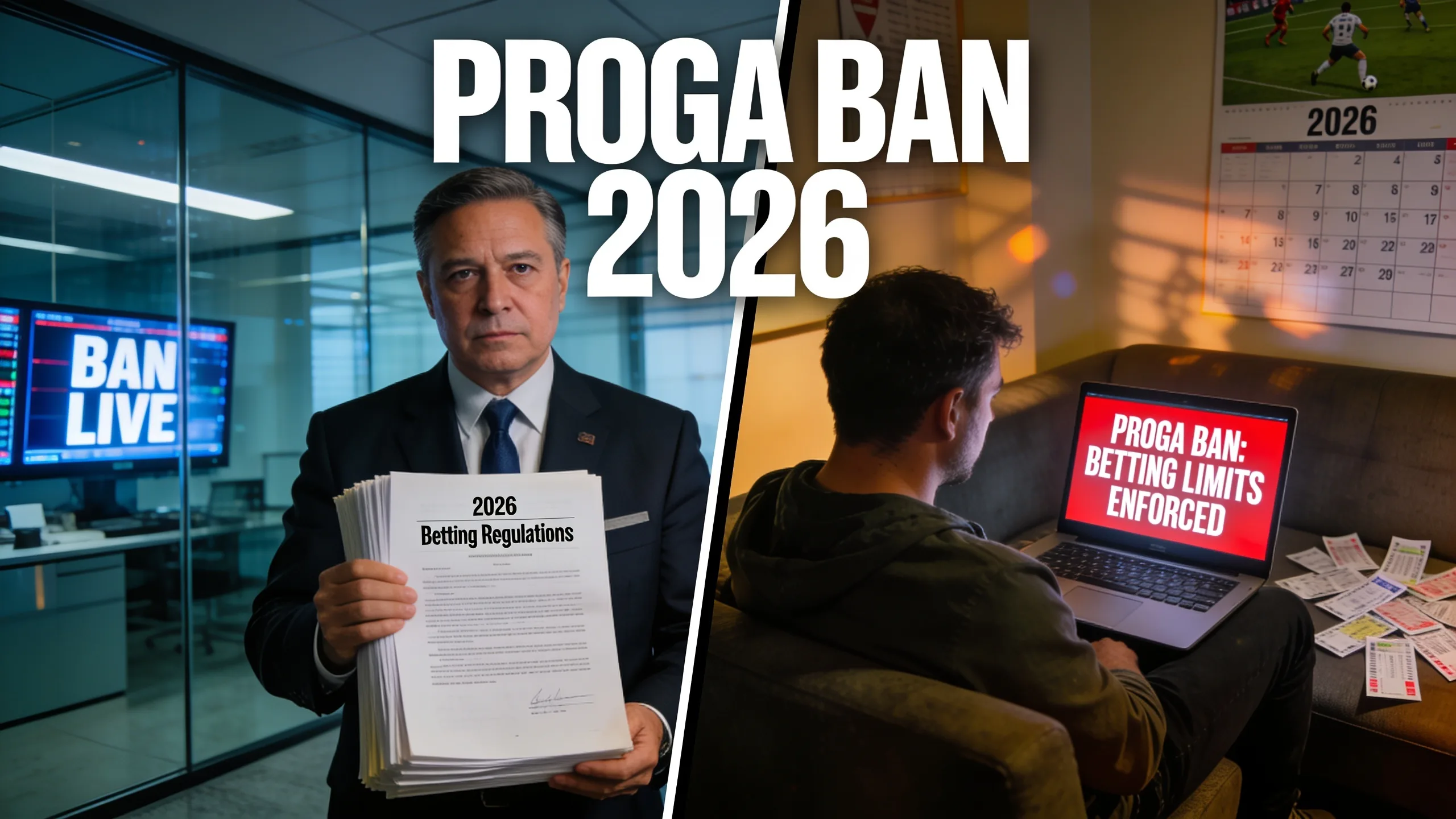
India's PROGA ban on real-money gaming became fully operational on 1 May 2026, ending a ten-month standstill that had already bankrupted domestic operators and frozen billions in player funds. The Promotion and Regulation of Online Gaming Act, 2025 — passed by both houses of Parliament in August 2025 — now has operational teeth through the Promotion and Regulation of Online Gaming Rules, 2026, notified by MeitY on 22 April 2026 and backed by a new central regulator.
The stakes are enormous. India's real-money gaming market was worth ₹23,000 crore at the time of the ban, built on platforms serving 488 million online gamers. Within the first 90 days of PROGA taking effect, domestic platforms recorded combined asset write-downs of more than $840 million. On 27 May 2026, the Supreme Court compounded the pressure by affirming that states retain independent power to ban online wagering and that a 28% GST applies on the full face value of every bet placed — not on gross gaming revenue.
In This Article
What PROGA Actually Bans
The law draws a hard line that overrides decades of court rulings on skill versus chance. Any online game — regardless of whether it relies on skill, luck, or both — where a user deposits money in expectation of a monetary return is classified as an Online Money Game (OMG) and is flatly prohibited. That wipes out poker, rummy, fantasy cricket, casino games, and sports betting in a single definition.
Criminal penalties under PROGA are severe:
- Up to 3 years imprisonment and fines of ₹1 crore for operating or facilitating payments for a prohibited platform
- Up to 2 years imprisonment and fines of ₹50 lakh for advertising an OMG
- Mandatory minimum sentences for repeat offenders
- Personal criminal liability for Heads of Payments, Chief Compliance Officers, and senior executives at banks and payment processors that continue facilitating transactions
E-sports played under recognised rules with no wagering, and online social games with no monetary stakes, are exempt — but require registration under the new authority.
OGAI: The New Central Enforcer
The Online Gaming Authority of India (OGAI) went live on 1 May 2026 as an attached office of MeitY, chaired by the Additional Secretary of MeitY and staffed by Joint Secretary-level representatives from the Ministries of Home Affairs, Finance, Information and Broadcasting, Youth Affairs and Sports, and Law and Justice. It is built as a digital-first body.
OGAI's core powers include:
- Publishing and maintaining a public list of prohibited OMGs
- Classifying any game via a five-factor determination test — completed within 90 days
- Directing banks and payment processors to block transactions without delay once a game is listed
- Coordinating blocking of offshore platforms under Section 69A of the IT Act and Section 14 of PROGA
- Imposing civil penalties calibrated to user harm, financial gain from non-compliance, and recurrence
In OGAI's second operational week, formal blocking coordination against offshore platforms serving Indian users was already moving through MeitY's machinery, with payment-system advisories naming specific merchant identifiers for blocklisting.
Supreme Court Doubles Down
Two weeks after OGAI went live, the Supreme Court issued a landmark ruling in State of Tamil Nadu & Ors. v. Junglee Games India Pvt. Ltd. & Ors. (2026 INSC 594, dated 27 May 2026). The bench of Justices JB Pardiwala and R Mahadevan confirmed that staking money on uncertain outcomes constitutes "betting" under Entry 34 of the Constitution's State List — meaning states can ban it independently of the central PROGA framework.
On GST, the court ruled that the taxable event is the supply of actionable claims tied to money staked, and the 28% rate applies on full bet value, not GGR. This ends a years-long challenge by the industry and locks in a tax structure that legal analysts describe as "commercially unviable" for licensed domestic operators.
A separate constitutional challenge — whether Parliament had competence to enact PROGA at all, given that betting and gambling are constitutionally State List subjects — remains pending before a larger Supreme Court bench. A ruling against PROGA could unwind the entire framework; a ruling for it would constitute four decades of skill-game jurisprudence as effectively archived.
Impact on Offshore Operators and Players
PROGA has nationwide applicability covering both domestic and offshore platforms accessible within India. MeitY has already begun using Section 69A blocking orders against foreign-hosted gambling sites. Banks and UPI processors received advisories within weeks of OGAI's launch listing merchant identifiers to block.
Despite this, early evidence suggests players are not stopping — they are migrating. A study by CUTS International found a significant rise in offshore participation following PROGA's enforcement. In Tamil Nadu, 67.8% of surveyed users reported using offshore platforms, many of them alongside domestic gaming before the ban. Players are routinely accessing offshore casino and betting sites via VPNs and crypto payment channels that bypass UPI blocks.
| Factor | Domestic Platforms | Offshore Platforms (e.g. Curaçao-licensed) |
|---|---|---|
| Legal status under PROGA | Prohibited; criminal exposure for operators | Prohibited for Indian-facing activity; blocking underway |
| Payment access | UPI / banking severed by OGAI directions | UPI blocked; crypto and VPN channels still active |
| GST liability | 28% on full bet value; retroactive | Offshore; GST collection not directly enforced yet |
| Player protections | None — platforms shuttered | Varies by licence; no Indian regulatory recourse |
| Enforcement risk for players | High visibility; accounts frozen | Lower for now; depends on future MeitY blocking scope |
What Remains Legal in India
PROGA does not ban all online gaming. Three categories survive under the new framework:
- E-sports — competitive, multiplayer tournaments recognised under the National Sports Governance Act, 2025 (NSGA) and registered with OGAI. Performance-based prize money is permitted. Spectator betting on e-sports events is not.
- Online social games — recreational or educational games with no monetary stakes. Registration is only mandatory where OGAI specifically directs it.
- Land-based casinos in Goa, Daman, and Sikkim — unaffected. Goa's floating casinos on the Mandovi River and Sikkim's licensed properties continue to operate under state law.
Horse racing also retains its historical skill-game exemption under state laws, though the new Supreme Court framing around "stakes on uncertain outcomes" has legal practitioners reassessing its long-term safety.
Sources
Primary regulatory documents and legal analysis were cross-checked against official government notifications, Supreme Court records, and specialist iGaming and legal publications.
- iGaming Business — India Publishes New Online Gaming Regulations ↗ https://igamingbusiness.com/legal-compliance/regulation/india-publish-new-online-gaming-regulations/
- World Casino Directory — India Supreme Court Rules States Can Regulate Wagering ↗ https://news.worldcasinodirectory.com/indias-supreme-court-rules-on-online-betting-states-can-regulate-wagering-123052
- ASGAM — Supreme Court Rules Skill Games as Gambling, 28% GST on Full Bet Value ↗ https://asgam.com/2026/05/28/indias-supreme-court-rules-skill-games-as-gambling-enforces-retrospective-28-gst-on-full-value-of-bets-placed-rather-than-on-ggr/
- Legal 500 — India's Online Gaming Reset: Decoding PROGA and the 2026 Rules ↗ https://www.legal500.com/developments/thought-leadership/indias-online-gaming-reset-decoding-proga-and-the-2026-rules/
- iPleaders — OGAI: Powers, Registration & Enforcement Under PROGA 2026 ↗ https://blog.ipleaders.in/online-gaming-authority-india-ogai/
- KPIAS Academy / CUTS International — Offshore Migration After PROGA ↗ https://kpiasacademy.com/online-gaming-rules-2026-india-upsc-promotion-regulation/
Whenever you see blanket bans across Asia on real money gaming, you see an immediate surge in black market and offshore activity. Players don't stop — they simply move.
— Industry analyst quoted in iGaming Expert, PROGA enforcement review · May 2026