
India PROGA Ban Faces Supreme Court Test August 2026
India's real-money gaming ban drives offshore surge as Supreme Court prepares constitutional ruling on the ₹230bn PROGA shutdown
Category: News · By Growl Games Editorial Team · Mon Jul 20 2026 · Updated Tue Jul 21 2026
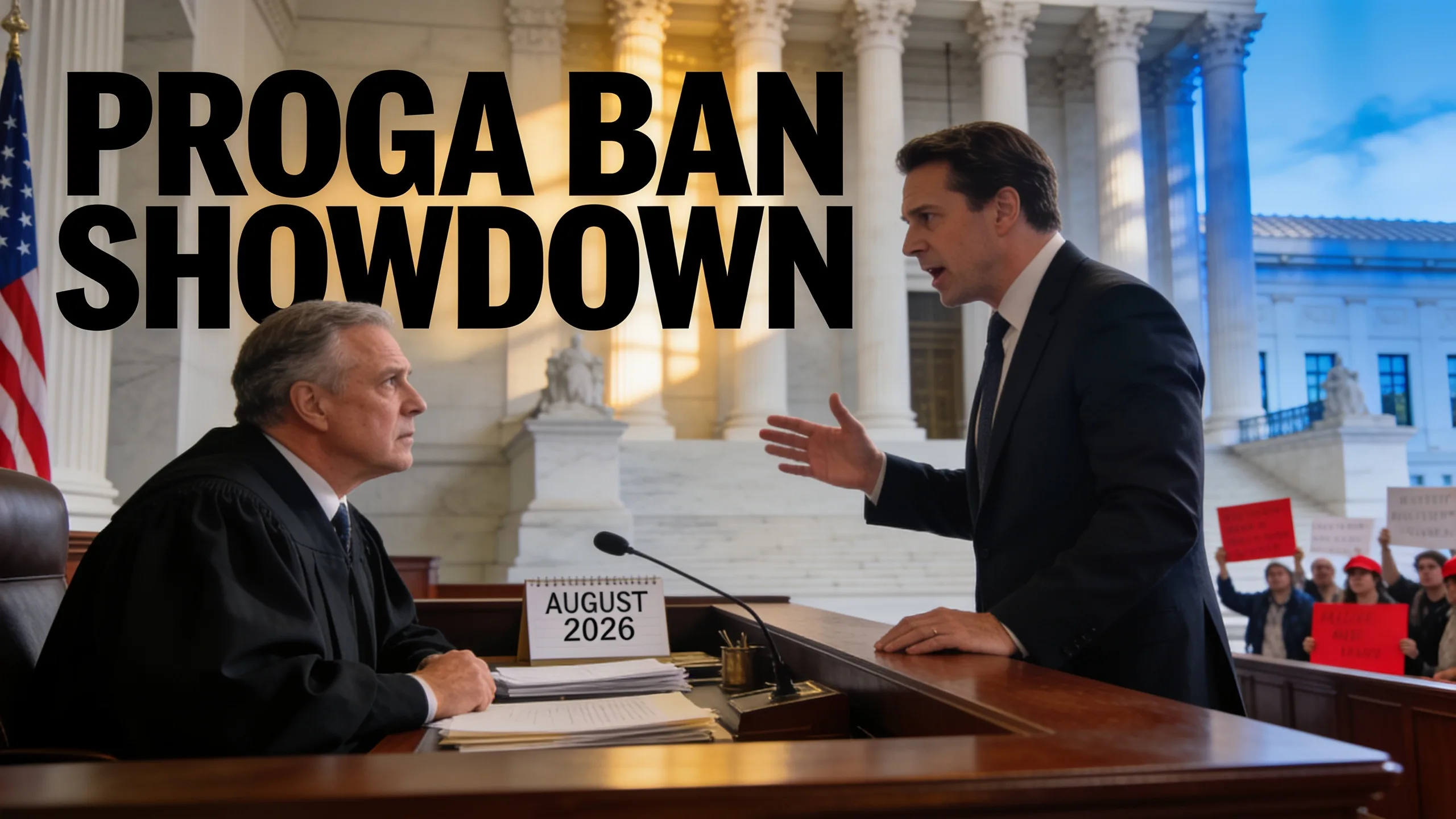
India's Promotion and Regulation of Online Gaming (PROGA) Act 2025 and its accompanying PROG Rules 2026 came into force on 1 May 2026, imposing a blanket nationwide ban on all real-money online games — chance-based and skill-based alike. The law shut down a domestic industry worth roughly ₹230 billion (US$2.75 billion), created the Online Gaming Authority of India (OGAI) under the Ministry of Electronics and Information Technology (MeitY), and criminalised the operation, promotion, and financial facilitation of online money games with penalties of up to ₹1 crore in fines and 3 years' imprisonment.
The ban has not stopped real-money play — it has redirected it. A survey by public-policy think tank CUTS International found that offshore platform usage among Delhi NCR users climbed from 68.3% pre-ban to 82% post-ban, a relative increase of more than 20%. Daily engagement on offshore sites jumped from 3.4% to 42.3% of respondents. Despite the government blocking more than 7,800 betting and gambling websites, mirror domains and alternative URLs keep reappearing. The constitutional validity of the entire framework now rests on a Supreme Court case with a critical hearing scheduled for 5 August 2026.
In This Article
What PROGA Bans — and How It Works
The PROG Act 2025, passed by Parliament on 21 August 2025 and notified by MeitY on 22 April 2026, explicitly erases the long-standing judicial distinction between games of skill and games of chance. Section 5 of the Act imposes a complete ban on all online real-money games (ORMGs) — rummy, poker, fantasy sports, casino games, and sports betting included.
The PROG Rules 2026 establish the operational architecture. Key provisions include:
- An objective, time-bound determination test to classify games as prohibited money games, permissible social games, or registrable e-sports.
- Mandatory age verification, parental controls, usage-time limits, and in-app counselling referrals for all registered platforms.
- A digital Certificate of Registration valid for up to 10 years, issued by the OGAI — required for e-sports operators and certain social gaming platforms.
- Money games barred from recognition as e-sports under the National Sports Governance Act 2025.
- Near-instantaneous takedown powers over non-compliant platforms, including offshore operators targeting Indian users.
The Supreme Court Challenge
Petitioners in the case Head Digital Works v Union of India (T.C.(C) No. 133/2025) include Dream Sports (Dream11), Games24x7, WinZO, and Head Digital Works, operator of A23 Rummy. Senior advocates Arvind Datar and CA Sundaram argue that PROGA's blanket prohibition violates Article 14 (right to equality), Article 19(1)(g) (freedom of trade), and Article 21 (right to livelihood) of the Indian Constitution. They also contend the Act unlawfully encroaches on states' constitutional authority over "betting and gambling" under Entry 34, State List.
The three-judge bench — led by Chief Justice Surya Kant, with Justices Joymalya Bagchi and V.M. Pancholi — has scheduled the next substantive hearing for 5 August 2026. Until a ruling is handed down, the ban remains in full force.
States vs. Centre: The June 2026 Ruling
On 8 June 2026, a Supreme Court bench comprising Justices J.B. Pardiwala and R. Mahadevan further complicated the regulatory picture. Ruling on petitions from Tamil Nadu and Karnataka, the court held that individual states retain legislative competence to regulate, restrict, or prohibit online gaming within their own jurisdictions, even alongside the federal PROGA framework. The judgment immediately restored the enforceability of Tamil Nadu's 2021 online gaming restrictions and Karnataka's police act amendments, both of which had previously been neutralised by High Court rulings.
Rather than creating a single national compliance standard, PROGA has produced a fragmented landscape in which operators must map their obligations state by state.
Offshore Surge and the Enforcement Gap
The ban's most visible unintended consequence is the shift to unregulated offshore platforms. India's Enforcement Directorate (ED) has linked illegal betting sites to money laundering, algorithmic manipulation, and routing of crime proceeds through shell entities. A Supreme Court public-interest litigation separately alleges that roughly 2,000 betting and gambling apps remain accessible via offshore servers and mirror domains. One industry analyst at the Indian Governance and Policy Project (IGAP) estimated the offshore market at approximately $20 billion, with unpaid tax losses exceeding $4 billion.
| Metric | Pre-PROGA (before Sept 2025) | Post-PROGA (late 2025 – mid 2026) |
|---|---|---|
| Offshore platform usage (CUTS survey) | 68.3% of active RMG users | 82% of active RMG users |
| Daily offshore engagement | 3.4% of respondents | 42.3% of respondents |
| Gambling websites blocked by govt. | Pre-ban: minimal | 7,800+ (and rising) |
| Domestic RMG industry value | ₹230 billion (~US$2.75 bn) | Effectively zero (shut down) |
| Estimated offshore market size | Not independently tracked | ~$20 billion (IGAP estimate) |
Impact on Operators and Bettors
For international operators and Indian bettors, the practical landscape heading into August 2026 looks like this:
- Domestic platforms (Dream11, Games24x7, WinZO, A23) have suspended paid real-money contests pending the Supreme Court ruling.
- Horse racing at licensed clubs remains fully legal nationwide under existing exemptions.
- Goa and Sikkim physical casinos continue to operate under state licensing regimes unaffected by PROGA.
- Offshore sportsbooks licensed in Malta, UK, or Curaçao remain technically accessible via mirror domains, though payment processing is increasingly disrupted as banks comply with blocking instructions.
- Enforcement targets operators and payment networks, not individual bettors — but financial risk to users on unregulated platforms remains real, with no Indian consumer-protection framework applying to offshore accounts.
A ruling from the 5 August 2026 Supreme Court hearing — whether a stay, interim relief, or a definitive constitutional verdict — will determine whether India's 488 million online gamers regain access to a regulated domestic market or remain funnelled toward unprotected offshore alternatives.
Sources
Primary sources and official records used in this article, listed in order of authority.
- MeitY — PROG Rules 2026 Official Gazette Notification ↗ https://www.meity.gov.in/static/uploads/2026/04/7e0b02d37fd07f81fa48578a9996aa85.pdf
- Supreme Court Observer — Head Digital Works v Union of India Case Page ↗ https://www.scobserver.in/cases/challenge-to-the-promotion-and-regulation-of-online-gaming-act-2025/
- iGamist — India Supreme Court Expands State Gaming Powers (8 Jun 2026) ↗ https://igamist.com/news/india-supreme-court-expands-state-gaming-powers
- MediaNama — India Blocks 242 More Gambling Sites, Offshore Use Still Rising ↗ https://www.medianama.com/2026/01/223-india-blocks-242-gambling-sites-total-above-7800/
- iGaming Business — India Publishes New Online Gaming Regulations (3 May 2026) ↗ https://igamingbusiness.com/legal-compliance/regulation/india-publish-new-online-gaming-regulations/
- Akashvani / News on Air — PROG Rules 2026 Comes Into Force (1 May 2026) ↗ https://newsonair.gov.in/promotion-regulation-of-online-gaming-rules-2026-comes-into-force/
Despite the ban, Indian users continue to access offshore platforms, often without any grievance redressal mechanisms. Regulation, rather than prohibition, may offer a more effective solution.
— Mihir Singhania, Legal Expert, Indian Governance and Policy Project · Exchange4Media, March 2026