
EU Proposes 3% Online Gambling Tax in Budget Plan
European Commission's €1.9 billion annual iGaming levy faces Malta veto threat as budget negotiations intensify ahead of the 2028–2034 cycle
Category: News · By Growl Games Editorial Team · Sun Jun 14 2026 · Updated Tue Jul 21 2026
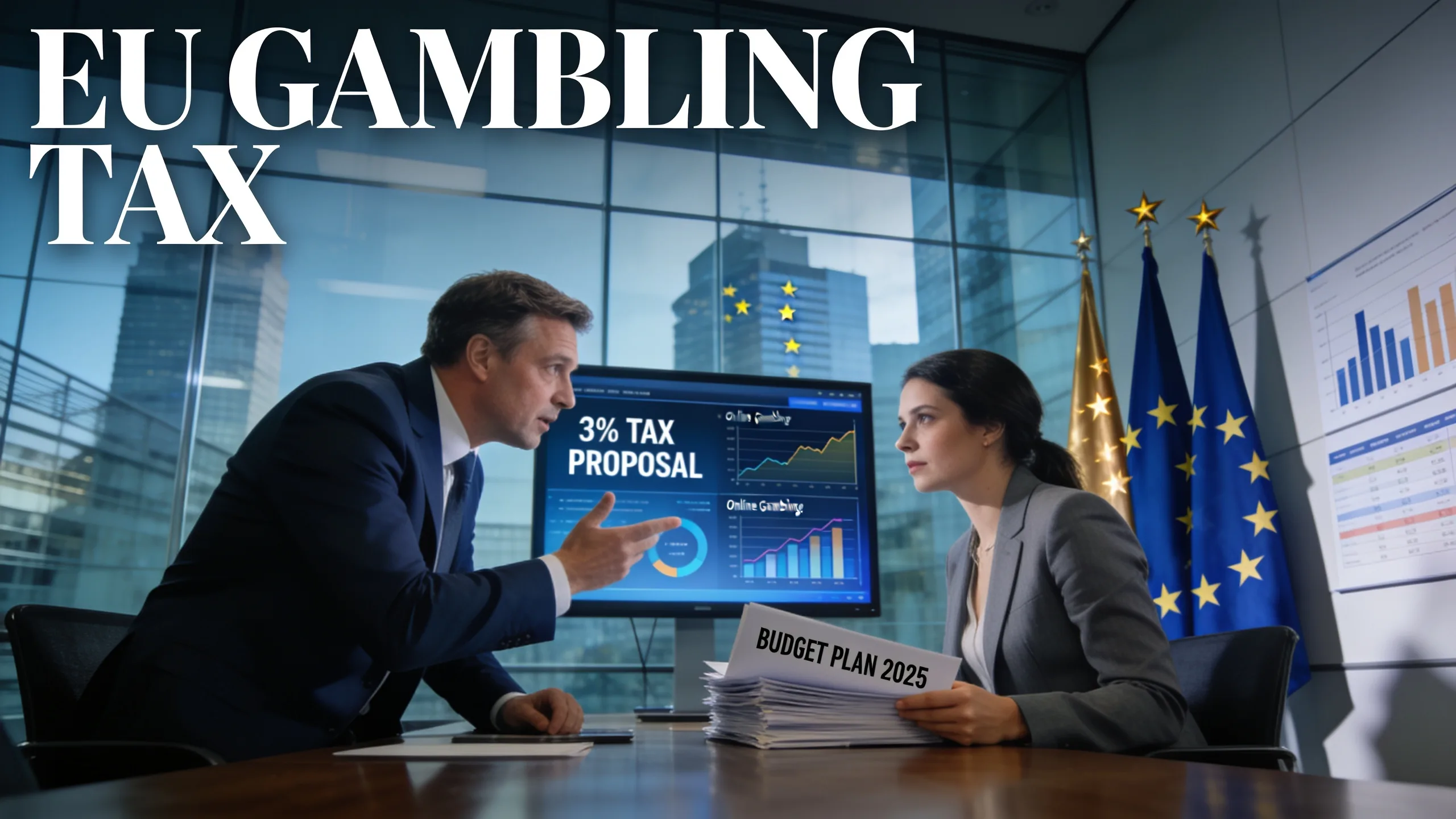
The European Commission has put the entire iGaming sector on notice with a proposal to impose a 3% levy on online gambling net turnover as part of the bloc's next long-term budget. Circulated to national governments and the European Parliament on 29 May 2026 and first reported by POLITICO, the plan would generate an estimated €1.9 billion per year between 2028 and 2034 — funding that would flow directly into the EU's central budget rather than to individual member states.
The gambling levy sits inside a broader fiscal package targeting digital sectors. Combined with proposed taxes on large digital companies and cryptocurrency transactions, the Commission projects the package could yield up to €11 billion annually. That figure is intended to reduce reliance on national contributions calculated as a share of gross national income — a structural change Brussels has pursued for years. The total package is designed to support nearly €2 trillion in EU spending through 2034, including repayments tied to the post-pandemic Next Generation EU borrowing programme.
In This Article
How the EU Online Gambling Tax Levy Would Work
The Commission has structured the proposal around net turnover — total stakes minus winnings returned to players — rather than gross gaming revenue. That distinction narrows the tax base compared to how most national regulators currently calculate operator obligations, but the €1.9 billion annual estimate confirms the effective burden would still be substantial across the EU's 27 fragmented licensing regimes. The Commission's own documents acknowledge there is no common EU definition of gambling, nor any harmonised tax approach, making implementation technically complex from the outset.
Revenue raised under the scheme would feed directly into the EU's "own resources" — budget income the bloc controls independently of member state transfers. The European Parliament backed the concept in its resolution on the next Multiannual Financial Framework, adopted 28 April 2026, which identified a gambling levy as one of several candidate revenue streams alongside crypto and digital services charges.
Political Obstacles: Malta's Veto Threat
Any new EU own resource requires unanimous approval from all 27 member states — giving a single country effective veto power. Malta is the most exposed jurisdiction. The island's online gaming sector underpins a significant share of its national economy, and Maltese MEP Alex Agius Saliba has signalled that the government could block the proposal to protect both the industry and the country's economic interests. Malta also enacted its own domestic gaming tax reforms in April 2026 — effective 1 October 2026 under Legal Notices 84 and 86 — designed to reinforce its competitiveness as a licensing hub, moves that sit in direct tension with a pan-European levy imposed from Brussels.
Beyond Malta, political friction surrounds the rest of the package. The proposed 3% tax on large digital companies — estimated at €5 billion per year — would fall heavily on US-based firms, raising concerns about retaliatory trade action from Washington. A 0.1% crypto transaction levy is projected to generate between €3 billion and €4 billion annually, with a separate crypto capital gains charge adding another €1–2.4 billion.
MEPs Formally Question the Commission
The political temperature rose further in June 2026 when MEPs Dick Erixon, Charlie Weimers, and Beatrice Timgren of the European Conservatives and Reformists (ECR) Group filed a formal written question to the Commission seeking clarification on the legal basis, scope, and implementation timeline for the proposed levy. Their submission reflects growing unease among centre-right lawmakers about the precedent a supranational gambling tax would set for national regulatory sovereignty. The Cyprus Council presidency was preparing updated budget allocation figures ahead of inter-institutional discussions expected around 10 June 2026, though negotiations remain unresolved.
What the EU Online Gambling Tax Means for Operators and Players
For operators, the critical variable is the tax base. The Commission has floated both net turnover and gross gaming revenue as possible bases, and the choice materially changes the effective rate. Larger pan-European groups — including publicly listed operators with multi-jurisdiction footprints — would face the heaviest absolute exposure given their market share. Smaller operators, and those whose revenues are concentrated in high-tax markets like Italy or Germany, could face compounded pressure if an EU levy stacks on top of existing national charges.
For players, a direct pass-through of costs could mean tighter bonuses, reduced promotional spend, and lower return-to-player rates as operators seek to protect margins. Offshore alternatives, which already capture significant unlicensed volume across the EU, could see increased player traffic if regulated operators raise effective costs.
| Proposed EU Revenue Stream | Rate | Estimated Annual Yield (2028–2034) | Key Obstacle |
|---|---|---|---|
| Online Gambling Levy | 3% of net turnover | €1.9 billion | Malta veto threat; no EU definition of gambling |
| Digital Services Tax | 3% on large tech firms | €5 billion | US trade retaliation risk |
| Crypto Transaction Levy | 0.1% per transaction | €3–4 billion | Cross-border enforcement complexity |
| Crypto Capital Gains Tax | TBD | €1–2.4 billion | Valuation and reporting standards |
| Total Package | — | Up to €11 billion | Unanimous 27-member-state approval required |
Whether the levy reaches formal legislation remains highly uncertain. A deal on the broader EU budget is expected by end of 2026, with some capitals already flagging possible delays. If it proceeds, the gambling tax would mark the first time a supranational body has imposed a direct levy on online iGaming operators — a structural shift with long-term implications for licensing economics across Europe. Players looking for licensed alternatives beyond the EU regulatory perimeter can explore the options reviewed at Growl Games.
Sources
Primary and secondary sources consulted for this article, in order of priority.
- Euronews — EU Tax Proposals Could Yield Up to €11bn Per Year, Commission Says ↗ https://www.euronews.com/my-europe/2026/05/29/eu-taxes-on-digital-services-gambling-crypto-could-yield-up-to-11-billion-per-year-commiss
- Malta Gaming Authority — Enhancements to Malta's VAT and Gaming Tax Frameworks ↗ https://www.mga.org.mt/enhancements-to-maltas-vat-and-gaming-tax-frameworks-for-the-gaming-sector/
- JAMMA — MEPs Question European Commission Over Potential EU Online Gambling Tax ↗ https://www.jamma.it/politica/meps-question-european-commission-over-potential-eu-online-gambling-tax-353556
- NEXT.io — EU Gambling Levy Would Raise Less Than Half of Original €28bn Forecast ↗ https://next.io/news/regulation/estimates-eu-gambling-levy-raise-under-half-original-forecast/
- Bright Side of News — Online Gambling Tax: EU Proposes EUR 1.9B Annual Levy ↗ https://brightsideofnews.com/gambling/online-gambling-tax-eu-commission/
- iGamist — EU Considers New Online Gambling Tax Proposal ↗ https://igamist.com/news/eu-considers-new-online-gambling-tax-proposal
If the proposal goes ahead, Maltese representatives could oppose it to safeguard Malta's national interests, emphasizing the government's commitment to protecting both the sector and the country's economic well-being.
— Alex Agius Saliba, MEP, Malta · Statement on the proposed EU online gambling levy, March 2026