
EU Gambling Levy Left Open in Cyprus Budget Compromise
Cyprus's €32.8bn budget cut sidesteps the proposed 3% online gambling tax, leaving the EU-wide levy for leaders to settle at the 18–19 June European Council summit.
Category: News · By Growl Games Editorial Team · Mon Jun 15 2026 · Updated Tue Jul 21 2026
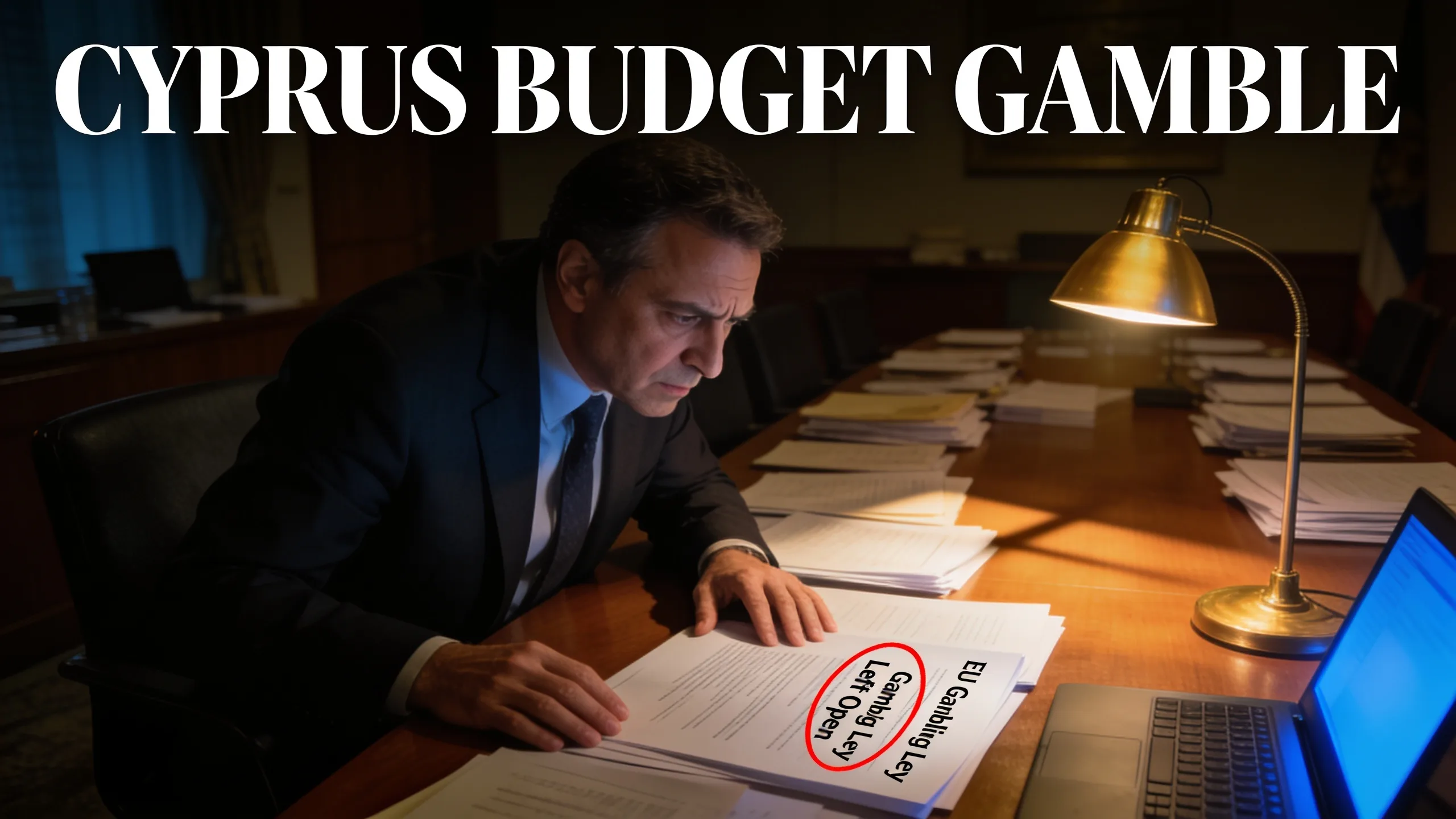
The EU gambling levy cleared its biggest procedural test yet on 11 June 2026, when the Cyprus Presidency of the Council tabled its first detailed budget compromise — and pointedly declined to kill it. The proposed EU-wide tax on online gambling, bundled into negotiations over the bloc’s 2028–2034 long-term budget, now heads to a leaders’ summit in Brussels on 18–19 June.
The stakes are concrete. The European Commission estimates a 3% levy on online gambling net turnover would raise about €1.9bn a year — roughly €13.3bn across the seven-year budget. For licensed operators already paying national gambling taxes that exceed 50% of gross gaming revenue in some member states, it would be a second, EU-level charge stacked on top.
In this article
What the EU gambling levy proposes
The idea began with Victor Negrescu, a vice-president of the European Parliament and Romanian Socialists and Democrats member, who in February 2026 floated a 1% levy on gambling revenue he claimed could raise €2bn–€4bn annually and up to €28bn over the budget term. More than 20 MEPs co-signed. In April, Parliament’s Budget Committee voted 26–9, with five abstentions, to fold the levy into its opinion on the Multiannual Financial Framework (MFF).
The Commission’s own modelling, reported by Politico, scaled the ambition back. A 3% charge on net turnover — total wagered minus payouts — produces the €1.9bn figure, less than half Negrescu’s original projection. The Commission paper concedes a structural snag: there is no common EU definition of gambling, and no harmonised way to tax it.
Cyprus punts the decision
On 11 June, the Cyprus Presidency unveiled a revised negotiating box that trims the Commission’s roughly €2tn July 2025 draft by about €32.8bn — a 2% cut pitched as a bridge between frugal and cohesion-focused capitals. Deputy minister Marilena Raouna defended the package as balanced, saying it was a compromise that addresses all voices in the Council.
Crucially, Nicosia left the most contentious chapter untouched. New “own resources” — the gambling levy alongside digital and crypto taxes — were kept open and kicked upstairs to the heads of government meeting on 18–19 June. European Council President António Costa has flagged the budget, including these revenue streams, as a headline agenda item.
How the levy compares
The gambling levy is one of several new revenue streams Brussels is weighing to cut member-state contributions, a basket that could yield up to €11bn a year combined. Set against the alternatives, the gambling tax is among the larger single measures — but far from the biggest.
| Proposed levy | Rate / base | Est. annual revenue | Seven-year total |
|---|---|---|---|
| Online gambling | 3% of net turnover | ~€1.9bn | ~€13.3bn |
| Electronic waste | Per-item charge | — | ~€15bn |
| Tobacco tax reform | Excise harmonisation | ~€1.6bn | ~€11.2bn |
| Crypto transactions | 0.1% per transaction | €3bn–€4bn | — |
| Crypto capital gains | Gains-based | €1bn–€2.4bn | — |
Dashes mark figures the Commission did not separately disclose. Estimates assume the sectors grow in line with the wider economy.
Why operators are fighting it
The European Gaming and Betting Association (EGBA) has branded the plan fundamentally unworkable. Its objections run on two tracks:
- Legal: because gambling is regulated by member states rather than at EU level, the association argues Brussels has no basis to define, administer or collect such a tax.
- Commercial: stacking an EU charge on top of national taxes would widen the price gap with unlicensed, untaxed operators, pushing players toward the black market and shrinking — not growing — member-state revenue.
Malta, where licensed betting is a pillar of the economy, is expected to resist hardest. Any single government can block the measure outright.
What happens next
Any new own resource requires the unanimous backing of all 27 member states through the Council, handing every capital an effective veto. The 18–19 June summit sets political direction but settles nothing concrete; a formal MFF deal is targeted for the end of 2026, likely under the incoming Irish Presidency. For now the levy survives precisely because no one has been forced to vote on it.
Sources
Primary regulator, institutional and trade-body material first, followed by reporting on the leaked Commission figures.
- EGBA — Statement on the Potential EU Online Gambling Levy ↗ https://www.egba.eu/news-post/statement-european-parliament-opinion-on-potential-eu-online-gambling-levy/
- Cyprus Presidency of the Council — MFF Negotiating Package Update ↗ https://cyprus-presidency.consilium.europa.eu/en/news/deputy-minister-for-european-affairs-the-cyprus-presidency-continues-its-work-as-planned/
- Euronews — Cyprus Proposes €32.8bn Cut to Next EU Budget ↗ https://www.euronews.com/my-europe/2026/06/11/cyprus-proposes-328bn-cut-to-next-eu-budget-as-compromise-between-rival-camps
- Euronews — EU Taxes on Digital, Gambling, Crypto Could Yield €11bn a Year ↗ https://www.euronews.com/my-europe/2026/05/29/eu-taxes-on-digital-services-gambling-crypto-could-yield-up-to-11-billion-per-year-commiss
- NEXT.io — EU Gambling Levy Estimate Below Half Original Forecast ↗ https://next.io/news/regulation/estimates-eu-gambling-levy-raise-under-half-original-forecast/
There is no legal basis to define, administer or collect such a levy.
— Maarten Haijer, Secretary General, EGBA · on the proposed EU online gambling levy, 2026