
UK Illegal Gambling Taskforce Sharpens Focus on Payments, Ads and Black Market Crackdown
DCMS publishes terms of reference for its new black-market unit, naming three subgroups and Baroness Twycross as chair, as licensed operators warn the £16.6bn unlicensed market is still growing.
Category: iGaming News - UK · By Growl Games Editorial Team · Tue May 19 2026 · Updated Thu Jul 23 2026
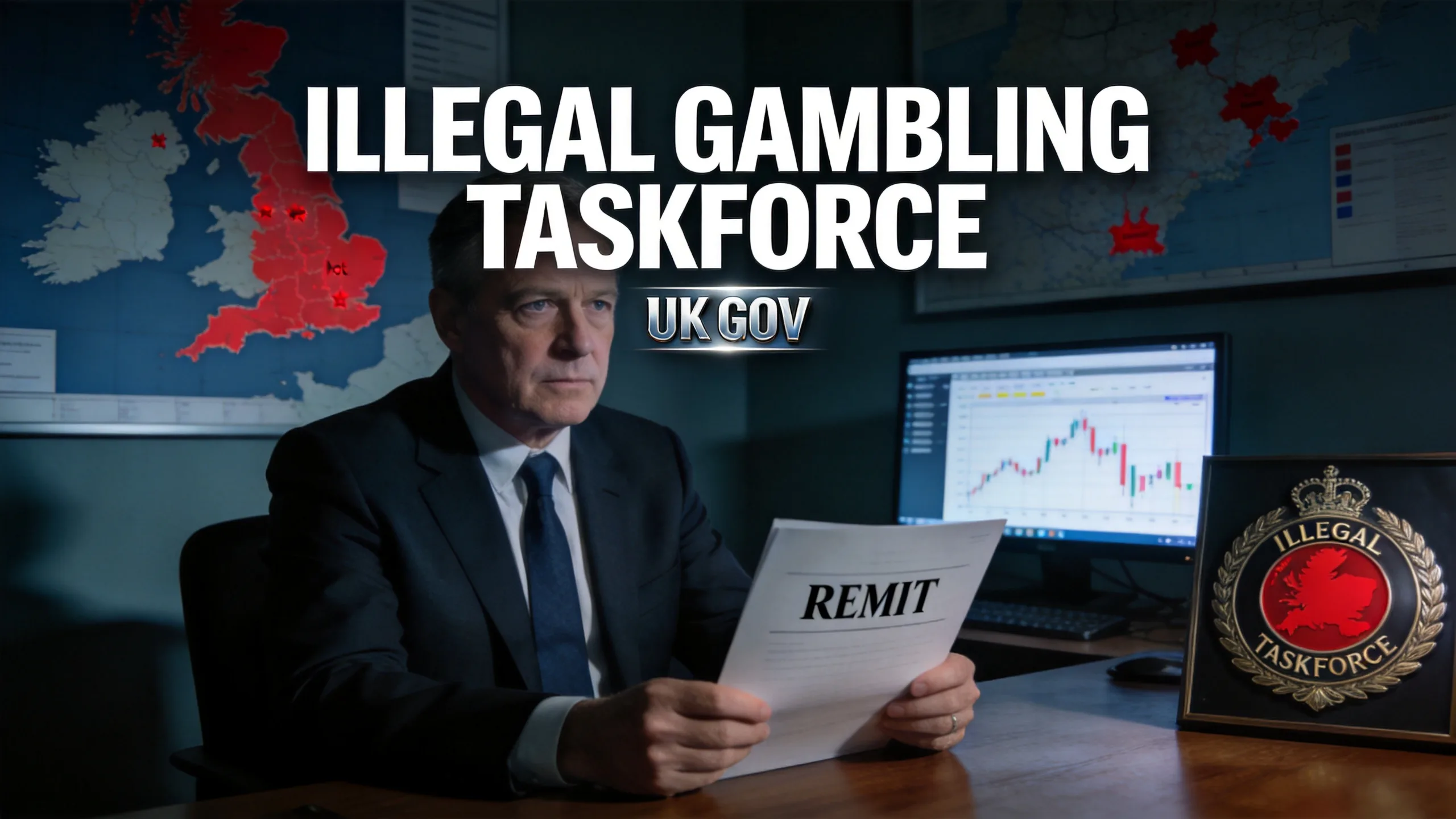
Table of Contents
- What Was Announced
- The Three Subgroups
- Scale of the Black Market
- Industry Reaction
- What Happens Next
- Sources
What Was Announced
On May 13, 2026, the UK's Department for Culture, Media and Sport (DCMS) published the terms of reference for its new Illegal Gambling Taskforce, five months after gambling minister Baroness Fiona Twycross first announced the body in January. Baroness Twycross will chair the taskforce, with Ben Dean, DCMS Director for Sport and Gambling, serving as co-chair.
Membership combines representatives from gambling operators, technology platforms, payment providers, the Gambling Commission, other regulators, government departments, and trade bodies. Individual members will not be named publicly, and meetings will be conducted under Chatham House rules. The taskforce is funded as part of a £26 million government allocation announced in last November's budget to combat illegal gambling.
The Three Subgroups
The taskforce will operate through three dedicated subgroups, each tied to a specific objective:
- Preventing or reducing payments to and from illegal gambling operators.
- Tackling the online advertising of unlicensed gambling.
- Improving cross-agency collaboration and enforcement covering both online and land-based illegal gambling.
The main taskforce will meet at least twice a year, while the subgroups are expected to meet quarterly. The body's remit is fixed at 12 months, after which the government will review whether to extend it. The taskforce will not direct or intervene in operational matters handled by the Gambling Commission.
Scale of the Black Market
The launch responds to figures showing the UK unlicensed market has expanded rapidly. H2 Gambling Capital estimates annual stakes with unlicensed operators reached £16.6 billion in 2025 — nearly triple the 2019 figure, according to the Betting and Gaming Council. Yield Sec analysis cited by the Campaign for Fairer Gambling places unlicensed operators at roughly 9% of Britain's online gambling market.
The Gambling Commission is also creating a new Head of Illegal Markets role, advertised at £65,000 a year, with applications open until May 24 and interviews scheduled for early June.
Industry Reaction
The Betting and Gaming Council has questioned whether the £26 million allocation is sufficient. BGC CEO Grainne Hurst has previously warned that the government's own modelling estimates the April 2026 Remote Gaming Duty increase — which raised online gaming tax from 21% to 40% — could push roughly £500 million in additional stakes into the unregulated sector.
Industry commentators have also criticised the taskforce's twice-yearly cadence as too infrequent given how quickly unlicensed operators shift tactics, and have flagged that its operational powers, scope, and international reach have not been fully defined — key questions when confronting offshore sites and decentralised payment networks.
Separately, Entain has written to the Independent Football Regulator and Premier League chief executive Richard Masters calling for an immediate ban on Premier League club sponsorships from unlicensed operators ahead of the 2026/27 season.
What Happens Next
The taskforce begins work immediately under its published terms of reference. The Gambling Commission's Head of Illegal Markets is expected to be appointed in June. A separate DCMS consultation on banning unlicensed gambling operators from sponsoring British sports teams is also pending. Operators should expect the next 12 months to bring sharper enforcement around payment rails, online ad placement, and cross-border cooperation — the three pressure points the taskforce has been built to address.
Sources
- SBC News — DCMS reveals key objectives of illegal gambling crime unit (May 14, 2026)
- Gambling Insider — UK Illegal Gambling Taskforce Targets Black Market Payments and Advertising
- The Lines — The UK Government Unveils Its New Illegal Gambling Taskforce
- Focus Gaming News — UK government confirms Illegal Gambling Taskforce goals and membership
- NEXT.io — UK government outlines remit of new Illegal Gambling Taskforce
- Gambling News — UK Unveils Details About the Responsibilities of Its Illegal Gambling Taskforce
- Casino Guardian — UK Gambling Commission Launches Key Position to Combat Illegal Betting
- InterGame — Details emerge about UK's new Illegal Gambling Taskforce
- Entain — Entain to Football Regulator: End Illegal Gambling Sponsorship