
India Supreme Court Rules Online Skill-Game Betting Is Illegal
Landmark 2026 INSC 594 ruling validates state bans and the PROG Act, closing the "skill game" defence for every real-money wagering platform.
Category: News - India · By Growl Games Editorial Team · Thu Jun 04 2026 · Updated Tue Jul 21 2026
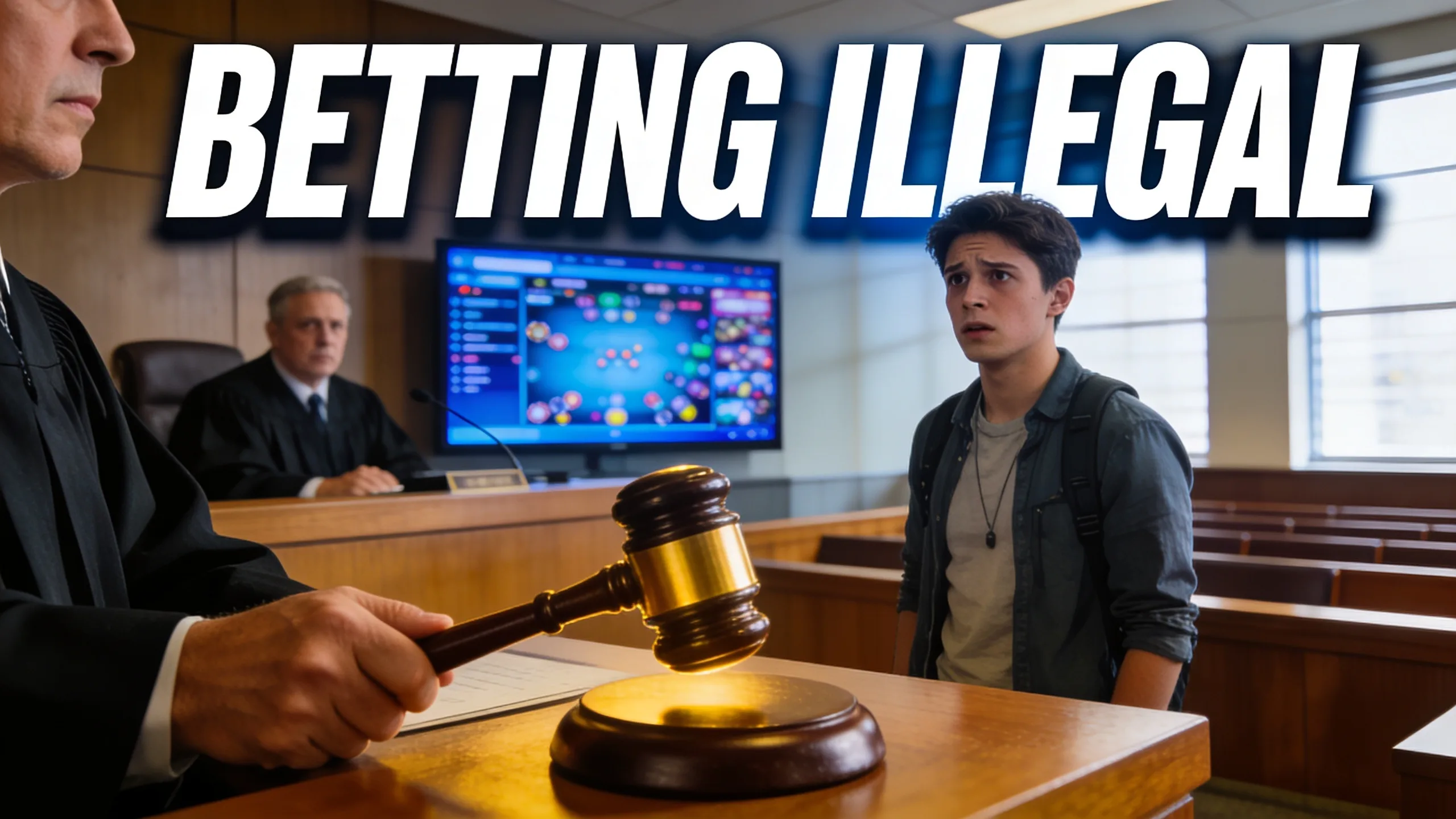
India's Supreme Court issued a landmark constitutional ruling on 27 May 2026, holding that wagering money on any online game — regardless of the skill it involves — constitutes “betting” under Indian law and carries no fundamental rights protection. The decision in State of Tamil Nadu & Ors. v. Junglee Games India Pvt. Ltd. & Ors. (2026 INSC 594), delivered by Justice JB Pardiwala and Justice R Mahadevan, closes the “game of skill” exemption that real-money platforms have deployed for more than a decade to contest India online gaming bans at both state and central level.
The bench upheld Tamil Nadu and Karnataka legislation criminalising online games played for monetary stakes — including rummy, poker, and fantasy sports — reversing prior rulings by both the Madras High Court and Karnataka courts that had sided with the industry. Beyond the constitutional decision, the bench warned in sweeping language that technological advances have turned every smartphone into a virtual gambling venue, with online money gaming carrying a documented impact in terms of addiction, financial losses, and suicides nationwide.
In This Article
Skill Does Not Shield Wagers: The Constitutional Break
The ruling draws a clean constitutional line: playing a skill game is protected commercial activity; staking money on its outcome is not. The court held that placing bets on any uncertain game result constitutes “betting” under Entry 34, List II of the Seventh Schedule of the Constitution, regardless of the skill involved. Such wagering is res extra commercium — outside the commerce protected by Article 19(1)(g) — and therefore subject to full state prohibition.
Junglee Games India, operator of India’s largest online rummy platform and primary respondent in the Tamil Nadu appeals, had argued that skill-based gaming deserved constitutional protection as a commercial trade. The bench rejected that framing: protection covers the game, not the stake. The case, indexed as Civil Appeal Nos. 6124–6131 of 2023, had been working through courts since 2021, when the Madras High Court first struck down a Tamil Nadu amendment on the same skill-versus-chance grounds the Supreme Court has now permanently rejected.
Public Order and Public Health: New India Online Gaming Grounds
The ruling grants states a second, broader regulatory path. Beyond Entry 34 (gambling), governments may also invoke their “public order” powers under Entry 1, List II to prohibit online wagering, because online money gaming has a documented nexus with addiction, financial distress, and resultant suicides. Smartphones and UPI-linked payment systems have extended wagering platforms deep into rural and lower-income communities, the bench observed, normalising gambling at a scale that physical venues never achieved. Public order, the court held, is disturbed not only by violence but by any activity that impairs public health or generates widespread economic and social instability — a definition that materially widens the regulatory mandate available to both state and central authorities.
| Game Type | Pre-Ruling Status | Post-Ruling Status | Platform Impact |
|---|---|---|---|
| Online Rummy (stakes) | Protected in most states; Madras HC sided with industry in 2021 | Wagering on outcome banned; TN & KA laws upheld | Junglee Games India — real-money mode suspended |
| Fantasy Sports (cash prizes) | In operation under court protection; widely contested | Real-money wagering on outcomes now prohibited | Dream11, Mobile Premier League — wagering features suspended |
| Online Poker (stakes) | Inconsistent rulings across High Courts | State bans constitutionally valid under both Entry 34 & Entry 1 | Adda52, PokerBaazi — affected in TN, KA; PROG Act applies nationally |
| eSports (no prize stakes) | Permitted as competitive skill activity | Unchanged — playing skill games remains constitutionally protected | Pure eSports platforms unaffected |
PROG Act 2025 and the New Legal Framework
The ruling lands against a substantially reshaped regulatory backdrop. Parliament passed the Promotion and Regulation of Online Gaming (PROG) Act 2025, imposing a nationwide prohibition on real-money online games and their associated advertising and payment transactions. The accompanying Regulation of Online Gambling Rules 2026 came into force on 1 May 2026, establishing a central regulator and a formal classification framework for online money games, e-sports, and social games. Major platforms including Dream11 and Mobile Premier League had already suspended wagering features after the PROG Act passed.
The industry had challenged the Act as rushed and overbroad, arguing it swept up legitimate skill activities. The Supreme Court’s ruling materially raises the bar for any such challenge: by framing online wagering as a public order and public health concern rather than merely a gambling regulation question, the bench opens legislative pathways that a purely commercial-rights argument cannot reach. Pending industry challenges to the central legislation now face a multi-ground constitutional obstacle.
Operator and Bettor Impact
Enforcement is accelerating alongside judicial clarity. On 29 May 2026, the Telangana CID Special Investigation Team arrested 11 individuals across Delhi, Gujarat, and Punjab in a crackdown on an illegal betting network linked to the offshore platform Dafabet, freezing 46 mule bank accounts and revealing ties to 225 complaints and 73 criminal cases across eight states. For India’s estimated 450 million online gaming users and the operators targeting that market, the combined judicial and enforcement picture is unambiguous:
- State governments can now ban real-money wagering on any game — skilled or otherwise — under Entry 34 (gambling), Entry 1 (public order), or both simultaneously.
- The PROG Act 2025 national framework carries strong judicial endorsement; licensing a real-money platform inside India is not viable under current law.
- Constitutional challenges from operators now face a steeper, multi-ground test following the bench’s public health framing.
- Offshore operators already blocked under Section 69A of the IT Act face sustained enforcement backed by new judicial authority at the highest level.
Sources
Primary judicial records and specialist trade sources were cross-checked before publication. LiveLaw sources are listed first as they carry the primary court record.
- LiveLaw — 2026 LiveLaw (SC) 591: State of Tamil Nadu & Ors. v. Junglee Games India ↗ https://www.livelaw.in/sc-judgments/2026-livelaw-sc-591-state-of-tamil-nadu-ors-v-junglee-games-india-pvt-ltd-536647
- LiveLaw — Every Mobile Phone Has Become a ‘Virtual Gambling House’: SC ↗ https://www.livelaw.in/top-stories/supreme-court-online-gaming-addiction-suicides-threat-public-health-536681
- Asia Gaming Brief — India Supreme Court Declares Every Mobile Phone a ‘Virtual Gambling House’ ↗ https://agbrief.com/news/india/04/06/2026/indias-supreme-court-declares-every-mobile-phone-a-virtual-gambling-house-in-landmark-online-gaming-ruling/
- iGaming Business — India Publishes New Online Gaming Regulations (May 2026) ↗ https://igamingbusiness.com/legal-compliance/regulation/india-publish-new-online-gaming-regulations/
- Telangana Tribune — Telangana CID Busts Dafabet Betting Racket, 11 Arrested ↗ https://www.telanganatribune.com/telangana-cid-busts-international-dafabet-betting-racket-11-arrested-in-pan-india-operation/
Every mobile phone is now a virtual common gambling house as well as the instrument of gaming.
— Justice JB Pardiwala and Justice R Mahadevan, Supreme Court of India · State of Tamil Nadu v. Junglee Games India Pvt. Ltd. (2026 INSC 594), 27 May 2026