
Wisconsin Legalizes Online Sports Betting Under Tribal Model
Governor Tony Evers signed AB 601, making Wisconsin the 33rd state to authorize mobile wagering, but tribal compact negotiations and federal approval will delay launch for months.
Category: iGaming News - US · By Growl Games Editorial Team · Tue May 26 2026 · Updated Tue Jul 21 2026
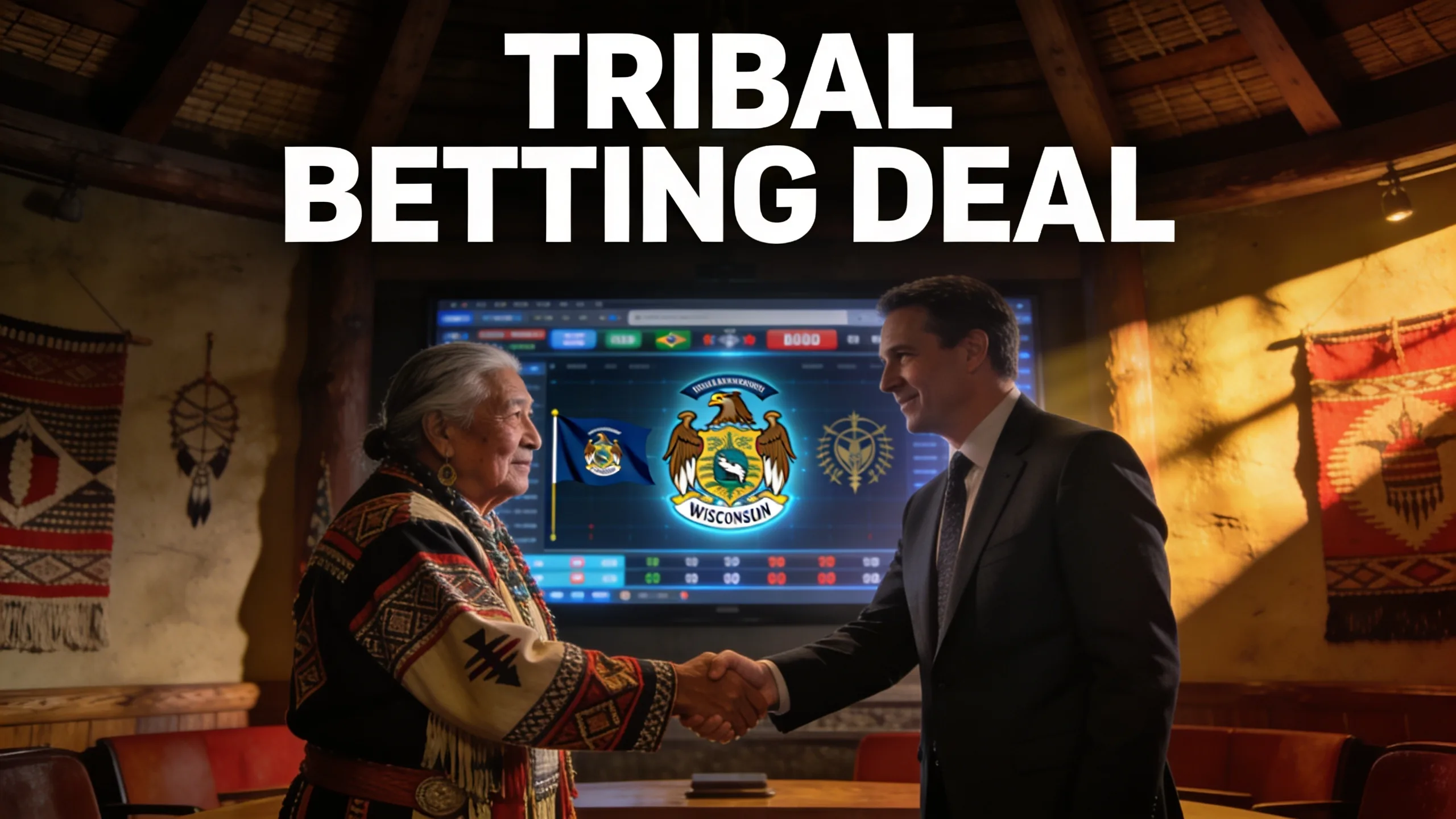
Wisconsin became the 33rd U.S. state to legalize online sports betting when Governor Tony Evers signed Assembly Bill 601 into law on April 9, 2026. The legislation establishes a tribal-first framework that grants all 11 federally recognized Wisconsin tribes the authority to offer statewide mobile wagering, provided betting servers remain physically located on tribal lands.
The signing marks a regulatory milestone, but actual launch remains months away. Each tribe must now negotiate updated gaming compacts with the state and secure approval from the federal Bureau of Indian Affairs before any mobile sportsbooks can go live. The law bypasses a contentious constitutional amendment battle by routing wagers through servers on tribal land, a hub-and-spoke structure similar to Florida's existing model.
Table of Contents
The Tribal-First Sports Betting Model
Wisconsin's approach keeps control exclusively with its native gaming operators. Under AB 601, now enacted as 2025 Wisconsin Act 247, bettors anywhere in the state can place mobile wagers that are legally deemed to occur where the server sits on tribal land. This structure preserves tribal gaming sovereignty while sidestepping the state's constitutional prohibition on gambling outside tribal territories, which has stood since 1848.
The law does not create a timetable for launch. Governor Evers emphasized that the state will not accept compact terms that favor larger tribes over smaller ones, signaling his expectation for a joint-venture or equitable revenue-sharing model among all 11 tribes. He stated in his signing message that he will reject any plan that fractures the opportunity into unequal pieces.
Once compact amendments are finalized between the state and tribal nations, those agreements must receive federal approval. That process mirrors what happened in 2021, when the Oneida Nation negotiated sports betting rights, submitted the compact to the Department of the Interior in July, received approval in August, and launched retail and geofenced mobile wagering by November of that year.
Revenue Sharing Sparks Operator Pushback
Federal law mandates that tribes retain at least 60% of revenue from any gaming activity conducted under tribal compacts. That requirement has drawn objections from major commercial sportsbook operators, who claim the economics do not support market entry under such terms.
The Sports Betting Alliance, representing DraftKings, FanDuel, BetMGM, Fanatics, and bet365, lobbied against the bill during the legislative process. Alliance representatives argued that online sports betting operates on narrow margins and requires significant capital investment, making a minority revenue share economically unviable for national operators.
Wisconsin's existing tribal operators may not need those partnerships. The Milwaukee Brewers maintain a relationship with the Potawatomi Casino, the Green Bay Packers partner with Oneida Casino, and the Milwaukee Bucks work with Betway. Both Oneida and Potawatomi already operate mobile apps within their respective tribal lands, giving them existing infrastructure to scale statewide.
Market projections estimate Wisconsin's online sports betting industry will generate between $6 million and $12 million annually for the state once fully operational.
| Aspect | Wisconsin Model | Traditional Commercial Model |
|---|---|---|
| Operator Eligibility | 11 federally recognized tribes only | Licensed commercial sportsbooks |
| Server Location | Must be physically on tribal land | No geographic server requirement |
| Revenue Share | Minimum 60% to tribes by federal law | Varies by state; typically tax-based |
| Launch Timeline | Pending tribal compacts and federal approval | Typically 6-18 months post-legalization |
| Constitutional Issue | Avoids amendment via hub-and-spoke structure | Often requires constitutional change |
Legal Challenges Loom Over Framework
The Wisconsin Institute for Law and Liberty announced in March 2026 that it intends to file a lawsuit if the governor signed the bill, arguing the legislation violates both the state constitution and the federal Indian Gaming Regulatory Act. The institute claimed the hub-and-spoke model constitutes an illegal expansion of gambling beyond tribal lands and creates tribal betting monopolies off-reservation.
In a memo distributed to lawmakers, the organization warned that litigation would subject Wisconsin's entire gambling apparatus to judicial scrutiny, not just the mobile sports betting framework. The group described itself as having a strong track record in state and federal courts and expressed confidence the law would be struck down.
However, Florida's nearly identical model has survived legal challenges. The Seminole Tribe of Florida and Governor Ron DeSantis defended their hub-and-spoke structure through years of court battles, with the framework ultimately upheld. That precedent may complicate any challenge to Wisconsin's law.
State Cracks Down on Prediction Markets
While Wisconsin moves forward with tribal-controlled sports betting, the state simultaneously escalated enforcement against unregulated prediction market platforms. On April 23, 2026, Wisconsin Attorney General Josh Kaul filed three civil lawsuits in Dane County Circuit Court targeting Kalshi, Polymarket, Robinhood, Coinbase, and Crypto.com.
The complaints allege these platforms facilitate illegal sports betting by offering event contracts that function as wagers under Wisconsin law. Kaul stated that thinly disguising unlawful conduct with financial terminology does not make it lawful, and accused the platforms of generating over $1 billion annually from sports-related contracts.
The federal Commodity Futures Trading Commission responded by suing Wisconsin on April 28, 2026, defending the platforms as federally regulated financial markets outside state gambling jurisdiction. The CFTC has filed similar suits against Arizona, Connecticut, Illinois, and New York in April 2026, setting up a jurisdictional clash expected to reach the U.S. Supreme Court.
The simultaneous legalization of tribal sports betting and crackdown on prediction markets highlights Wisconsin's effort to control gambling within state-sanctioned frameworks while the broader regulatory landscape remains unsettled.
Sources
This article draws from official government documents, legislative testimony, court filings, and industry coverage:
- Wisconsin Governor's Office — AB 601 Signing Statement ↗ content.govdelivery.com/attachments/WIGOV/2026/04/09
- Wisconsin State Legislature — Assembly Bill 601 Full Text ↗ docs.legis.wisconsin.gov/2025/proposals/reg/asm/bill/ab601
- Covers — Wisconsin Legalizes Path to Mobile Sports Betting ↗ www.covers.com/industry/wisconsin-tribes-governor-sign-online-sports-betting-bill-what-next-april-2026
- Sports Handle — Wisconsin Sports Betting 2026: Legal Apps and Sites ↗ sportshandle.com/wisconsin/
- Betting USA — Wisconsin Sports Betting: Online Sportsbooks & Betting Apps ↗ www.bettingusa.com/states/wi/
- CoinDesk — Wisconsin Joins Prediction Market Fight ↗ www.coindesk.com/policy/2026/04/24
- Bitcoin.com — CFTC Sues Wisconsin Over Prediction Market Ban ↗ news.bitcoin.com/cftc-sues-wisconsin-over-prediction-market-ban/
This legislation is the beginning of a conversation, not the end of one. The real work begins today. Each of the 11 Tribes must now work diligently and together to shape the future of sports betting in Wisconsin.
— Tony Evers, Governor of Wisconsin · Signing Statement, April 9, 2026