
Prediction Markets Face European Crackdown at World Cup 2026
Nine EU gambling regulators jointly target Kalshi and Polymarket as illegal gambling, with $5–10 billion in World Cup trading volume at stake.
Category: News · By Growl Games Editorial Team · Mon Jun 29 2026 · Updated Tue Jul 21 2026
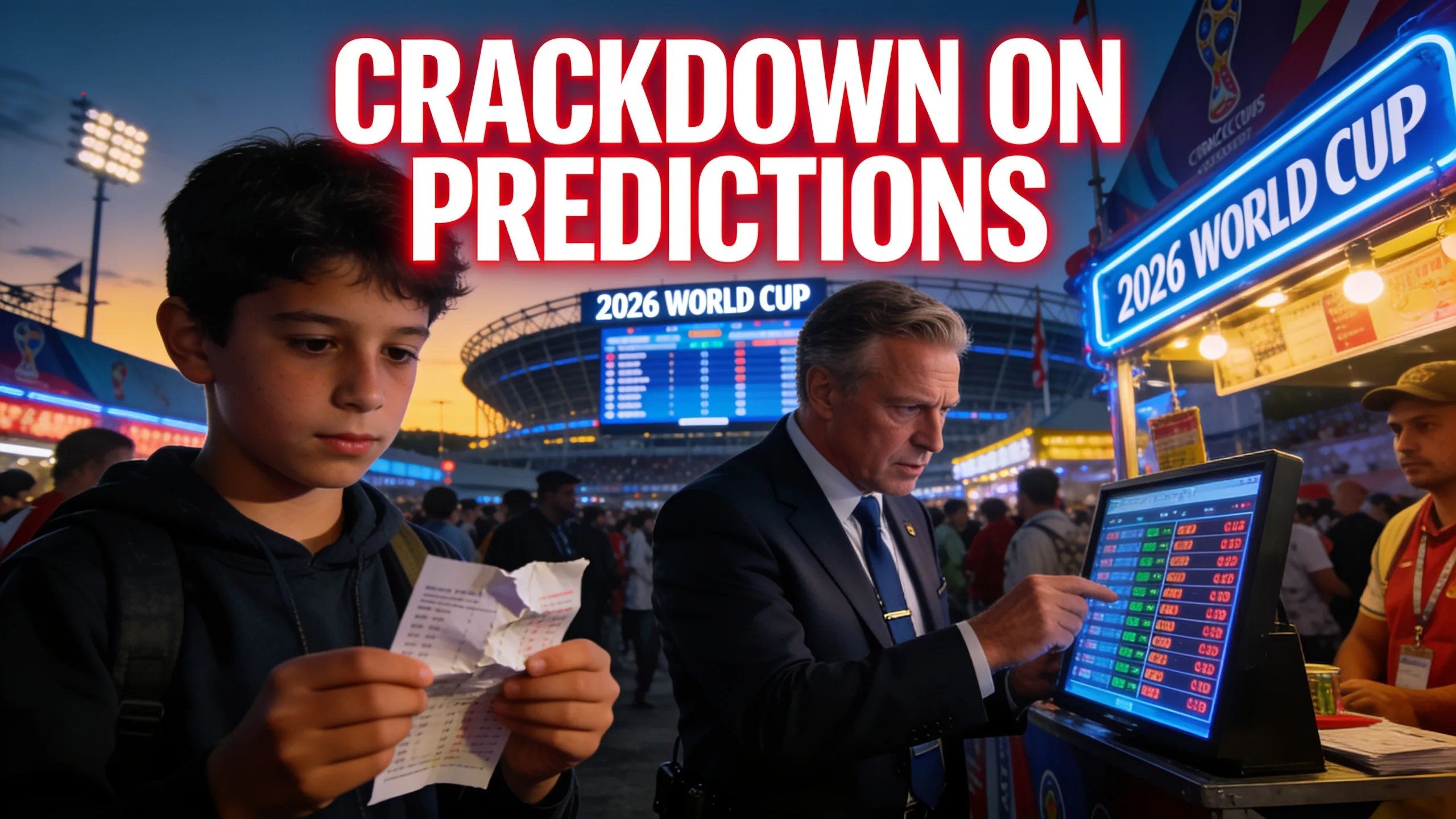
On 17 June 2026 — the same day the 2026 FIFA World Cup kicked off — gambling regulators from nine European countries issued a coordinated joint declaration targeting unlicensed prediction market platforms operating across the continent. The signatories — Belgium, France, Germany, Italy, the Netherlands, Poland, Portugal, Spain, and Switzerland — pledged enhanced cross-border enforcement against platforms they classify as illegal gambling, citing the tournament as a catalyst for a surge in unprotected consumer activity.
The declaration arrives as prediction market trading volumes hit record highs. A June 2026 Bernstein analysis projects the World Cup alone could add between $5 billion and $10 billion in trading volume across platforms such as Kalshi and Polymarket. The tournament winner market on Polymarket had already generated nearly $2.5 billion in volume by mid-tournament, while one trader turned a $400,000 stake into a $4.7 million win on a single Spain result — the kind of viral outcome regulators say drives dangerous recruitment of new users.
In This Article
What Happened: The Joint Declaration
The nine regulators published a shared statement on 17 June 2026 declaring that unlicensed prediction market platforms constitute illegal gambling activity in their jurisdictions. The declaration commits each authority to coordinated information sharing, cross-border monitoring of advertising and betting integrity, and a menu of escalating enforcement responses including formal warnings, sanctions, service blocking, fines, advertising restrictions, and account freezes — targeting in particular platforms operating under offshore or decentralised crypto licences.
The statement's sharpest language was reserved for the product design itself, with the regulators describing the combination of "visibility, accessibility and the viral nature inherent to this type of platform" as creating a significant addictive cycle. They also issued a direct warning to sports federations, leagues, and clubs to verify a platform's legal status in each territory before signing commercial partnerships — a pointed reference to Kalshi's sponsorship deal with Argentina's AFA, announced in a joint Instagram post featuring Lionel Messi.
Why Now: World Cup Volume & Sports Sponsorships
European regulators have been moving on prediction markets individually for months, but the World Cup accelerated the timeline for joint action. The commercial scale of the sector makes inaction increasingly untenable: Kalshi closed a $22 billion Series F in May 2026, while Polymarket is reportedly raising at a $15 billion valuation. Trading volume on prediction markets overtook on-chain gambling for the first time in Q1 2026, reaching $36.6 billion against gambling's $14 billion, according to a TRM Labs report.
- In April 2026, Kalshi alone recorded a single-month record of $14.81 billion in notional trading volume, holding approximately 72% market share over Polymarket.
- Platforms have aggressively courted mainstream sports visibility: beyond the AFA deal, Polymarket partnered with Dow Jones and Kalshi with Nasdaq for market data integration.
- The GESPA director of Switzerland stated plainly that platforms operating in Switzerland without a licence will be blocked, as the Swiss Money Gaming Act provides no consumer protections for users on these sites.
Enforcement Actions Already Underway
The joint declaration formalises what has already been a patchwork of national blocking orders. Spain's DGOJ ordered internet service providers on 26 May 2026 to block both Kalshi and Polymarket while it investigates whether their products constitute unlicensed gambling. France, the Netherlands, and Portugal have implemented comparable geoblocking steps, while Germany's regulator is reviewing advertising linked to the platforms. Hungary has blocked Polymarket outright, and Romania blacklisted it amid a surge in election betting.
Spanish authorities have already encountered a predictable obstacle: users shifting to VPNs within days of blocks being imposed. The declaration acknowledges this limitation — coordination of intent does not yet constitute a shared legal instrument, and blocking orders remain national in scope.
Platform Comparison: Regulated vs Unlicensed in Europe
| Platform | EU Regulatory Status | Key Jurisdictions Blocked | Primary Concern Cited |
|---|---|---|---|
| Kalshi | CFTC-regulated (US only); unlicensed in EU | France, Spain, Italy, Netherlands, Switzerland | Sports sponsorships; no EU licence route exists |
| Polymarket | Offshore; no EU licence | France, Spain, Netherlands, Hungary, Romania, Portugal, Italy | Insider trading risk; election betting; AML gaps |
| Malta-licensed sportsbooks | MGA-licensed; accepted across most EU markets | Germany (GGL required locally) | Country-by-country licence still required |
| Traditional EU operators | Multi-jurisdiction licensed (MGA, UKGC, etc.) | None by joint declaration | Operating within declared legal framework |
What It Means for Bettors and Operators
For bettors, the immediate practical consequence is expanding geoblock enforcement during the highest-volume betting period of the year. The regulators' cited risks include no mandatory betting limits or cooling-off periods, weak age and identity verification, exposure to insider trading, and complete absence of problem gambling protections. In the Netherlands, the KSA noted that vulnerable groups, particularly 18–24 year olds, are most at risk of entering gambling for the first time during the tournament — with a TransUnion study confirming that 43% of UK adults aged 25–34 planned to increase betting frequency during the World Cup, and 12% of that age group had already knowingly used an unlicensed site.
For licensed operators, the enforcement push is broadly favourable. It removes competition from under-capitalised, under-regulated rivals while the UNODC separately warns that illegal wagering could exceed the legal market globally during the tournament. Flutter, which expects World Cup staking across its group to be roughly twice the level of Qatar 2022, framed the illegal market threat as a more significant consumer risk than competition between licensed operators. Malta has taken a contrarian position, signalling active exploration of prediction markets as an emerging product category — putting the island jurisdiction on a potential collision course with the nine-regulator bloc.
Sources
Primary sources first; secondary coverage cross-checked across six independent outlets.
- European Gaming — Why Nine European Regulators Moved Together on Prediction Markets ↗ https://europeangaming.eu/portal/latest-news/2026/06/19/207511/why-nine-european-regulators-moved-together-on-prediction-markets/
- iGaming Business — Nine European Regulators Coordinate Crackdown Against Prediction Markets ↗ https://igamingbusiness.com/prediction-markets/nine-european-regulators-coordinate-crackdown-unlicensed-prediction-markets/
- Gaming Tech Law — Prediction Markets in Europe: Nine Regulators Warn Over the World Cup Betting Surge ↗ https://www.gamingtechlaw.com/2026/06/prediction-markets-in-europe/
- Cryptopolitan — Prediction Market Platforms Face Massive Crackdown by European Regulators During FIFA World Cup 2026 ↗ https://www.cryptopolitan.com/prediction-market-crackdown-regulator-fifa26/
- iGaming Business — Young Adults Lead Surge in Betting Ahead of World Cup ↗ https://igamingbusiness.com/sports-betting/young-adults-lead-surge-betting-ahead-world-cup-research-shows/
- Flutter Entertainment — The World Cup Should Be a Victory for Regulated Betting, Not the Illegal Market ↗ https://flutter.com/news-media/blogs/the-world-cup-should-be-a-victory-for-regulated-betting-not-the-illegal-market/
The combination of visibility, accessibility and the viral nature inherent to this type of platform creates a significant addictive cycle.
— Joint Declaration, Nine European Gambling Regulators · 17 June 2026