Maine iGaming Law Takes Effect July 2026 — Tribal Monopoly and Federal Lawsuit Explained
LD 1164 makes Maine the 8th US iGaming state, granting Wabanaki tribes exclusive casino rights — but a Churchill Downs lawsuit could stall the launch
Category: News - USA · By Growl Games Editorial Team · Tue Jun 09 2026 · Updated Tue Jul 21 2026
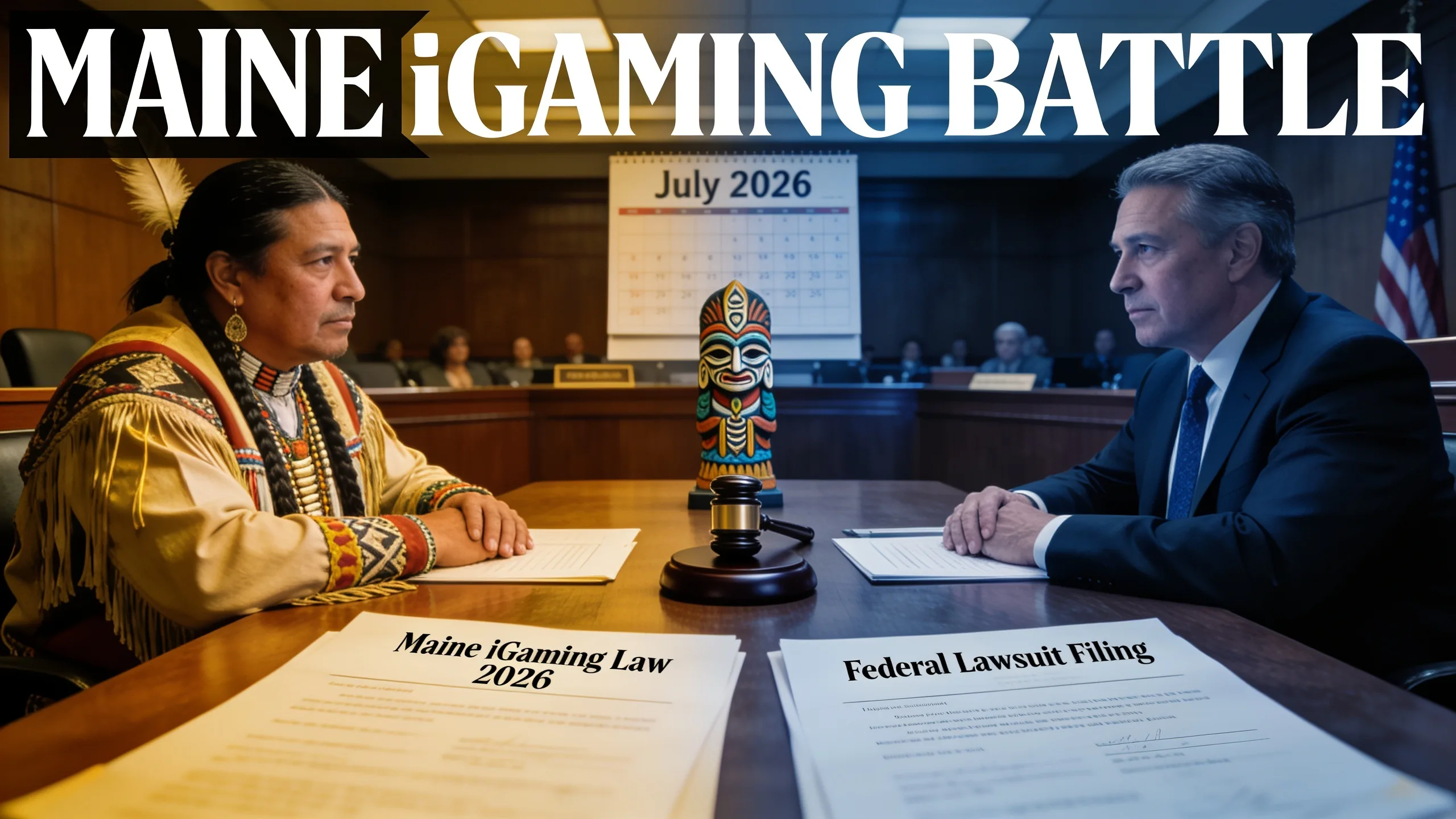
Maine's tribal-exclusive iGaming market becomes legally operative in July 2026, making the state the eighth US jurisdiction to authorise real-money online casino gaming — but a federal lawsuit filed by Churchill Downs Incorporated is already threatening to delay, or even derail, the rollout before a single wager is placed. At stake is a market analysts at Eilers & Krejcik Gaming estimate could generate roughly $95 million in gross gaming revenue in its first year, climbing toward $180 million annually within three years.
Governor Janet Mills allowed Legislative Document 1164 (LD 1164) — the Act to Create Economic Opportunity for the Wabanaki Nations — to pass into law without her signature on 8 January 2026. The law grants each of Maine's four federally recognised Wabanaki tribes — the Penobscot Nation, Passamaquoddy Tribe, Houlton Band of Maliseet Indians, and Mi'kmaq Nation — an exclusive statewide iGaming licence, with permission to partner with a single commercial operator. Two tribes have pre-existing relationships with Caesars and DraftKings, which handled Maine's sports-betting launch in November 2023.
In This Article
What LD 1164 Does — and Doesn't Do
LD 1164 authorises online slots, table games, and poker for Maine residents, exclusively via tribal operators. Maine's two commercial brick-and-mortar casinos — Oxford Casino (owned by Churchill Downs) and Hollywood Casino (owned by Penn Entertainment) — are entirely excluded from the iGaming vertical under the current framework. The law sets a tax rate of 16–18% of adjusted gross gaming revenue, with proceeds earmarked for problem-gambling services, tribal economic development, emergency response, opioid treatment programmes, and veterans' housing.
What the law does not do is launch a live market. The Maine Gambling Control Unit (MGCU) must first finalise licensing criteria, platform standards, responsible-gaming requirements, and enforcement mechanisms through a formal rulemaking process. No operator applications have been accepted and no launch date has been announced as of June 2026.
The Churchill Downs Federal Lawsuit
On 23 January 2026, Churchill Downs and Oxford Casino filed suit in the US District Court in Portland against MGCU Executive Director Milt Champion, alleging LD 1164 violates the Equal Protection Clauses of both the US and Maine constitutions. The complaint characterises the tribal exclusivity as a "race-and-geography-based monopoly," arguing that if Maine chooses to permit iGaming at all, it must do so without discriminating on the basis of race or citizenship. Oxford Casino claims it stands to lose "millions of dollars" in cannibalised revenue.
The National Association Against iGaming (NAAiG) — of which Churchill Downs is a founding member — separately cited a study projecting the law could cost Maine $22 million in lost labour funds and deliver a $60 million blow to the state's economy. In a parallel development, a federal judge ruled in April 2026 that the Wabanaki Nations may formally intervene in the case as co-defendants, giving the tribes direct standing to defend their exclusive rights in court.
Rulemaking and Launch Timeline
MGCU Executive Director Champion told Maine's Veterans and Legal Affairs Committee that rulemaking would begin once LD 1164 takes effect in July 2026, and that the process could move "relatively quickly," with a realistic live-market target of early 2027. A companion bill, LD 2007, which bans dual-currency sweepstakes casino platforms from operating in the state, is expected to take effect on the same July timeline — meaning the state intends to clear the field of grey-market operators before tribal iGaming goes live.
- July 2026: LD 1164 and LD 2007 both take effect; MGCU begins rulemaking and staff buildout.
- Late 2026: Licensing criteria finalised; tribes formally select and submit commercial operator partnerships for approval.
- Early 2027: MGCU target for awarding up to four tribal iGaming licences and platforms going live.
Maine vs Other iGaming States
| State | Year Legalised | Tax Rate (AGR) | Model | Key Operators |
|---|---|---|---|---|
| New Jersey | 2013 | 15% | Commercial (casino-anchored) | DraftKings, BetMGM, Caesars |
| Pennsylvania | 2019 | 54% (slots) / 16% (tables) | Commercial (casino-anchored) | BetMGM, DraftKings, Fanatics |
| Michigan | 2021 | 20–28% | Mixed (commercial + tribal) | FanDuel, DraftKings, BetMGM |
| Connecticut | 2021 | 18% | Tribal exclusive | DraftKings, FanDuel (via tribes) |
| Maine | 2026 (law); 2027 (launch est.) | 16–18% | Tribal exclusive only | Caesars, DraftKings (pre-aligned) |
Maine's tax rate is one of the lowest among legalised iGaming states, which analysts say will attract strong operator interest — provided the Churchill Downs litigation does not freeze the licensing process.
What Players Can Expect
Once live, Maine residents will have access to real-money online slots, blackjack, roulette, baccarat, and poker through up to four tribally licensed platforms. The MGCU has confirmed that mandatory responsible-gaming tools — including self-exclusion, deposit limits, and age/identity verification — will be baked into the licensing requirements.
For bettors already active on Maine's tribal sportsbooks, iGaming represents a natural cross-sell expansion from the same operator apps they already use. Maine's existing sports-betting market generated $42 million in operator revenue during 2025 — adding iGaming could more than triple the state's regulated online-gambling revenue base. The critical variable remains the federal court outcome: if the Churchill Downs suit succeeds in voiding LD 1164 or winning an injunction, both the launch and the competitive structure of the market would need to be redesigned from scratch.
Sources
Primary regulatory and legal sources were used first; secondary industry coverage cross-checked for accuracy and detail.
- Gambling Insider — Maine Tribal Online Casinos LD 1164 ↗ https://www.gamblinginsider.com/news/102255/maine-tribal-online-casinos-ld-1164
- iGaming Business — Churchill Downs Maine iCasino Lawsuit Filed ↗ https://igamingbusiness.com/casino/churchill-downs-maine-icasino-lawsuit-filed/
- SiGMA World — Maine Regulator on Sweepstakes Ban and July 2026 Timeline ↗ https://sigma.world/news/maine-regulator-discusses-sweepstakes-ban-plan/
- GamblingNews — Maine Wabanaki Nations Join Federal Lawsuit ↗ https://www.gamblingnews.com/news/maine-tribes-join-lawsuit-over-online-gaming-rights/
- SportsLine — Maine Online Casinos: June 2026 Update ↗ https://www.sportsline.com/casinos/maine/
If the Maine legislature has made the choice to allow iGaming within the state, it should give everyone a fair chance to compete, without regard to race or citizenship, as both the United States and Maine constitutions require.
— Churchill Downs Incorporated, Federal Complaint, US District Court, Portland · January 2026