
Gambling Disorder Diagnoses Jump 61% in Legal Sports Betting States
Epic Research analyzed 197 million U.S. patient records and found gambling disorder diagnoses rose 61% in legal sports betting states since 2018, while falling 29% elsewhere.
Category: News · By Growl Games Editorial Team · Wed Jul 01 2026 · Updated Tue Jul 21 2026
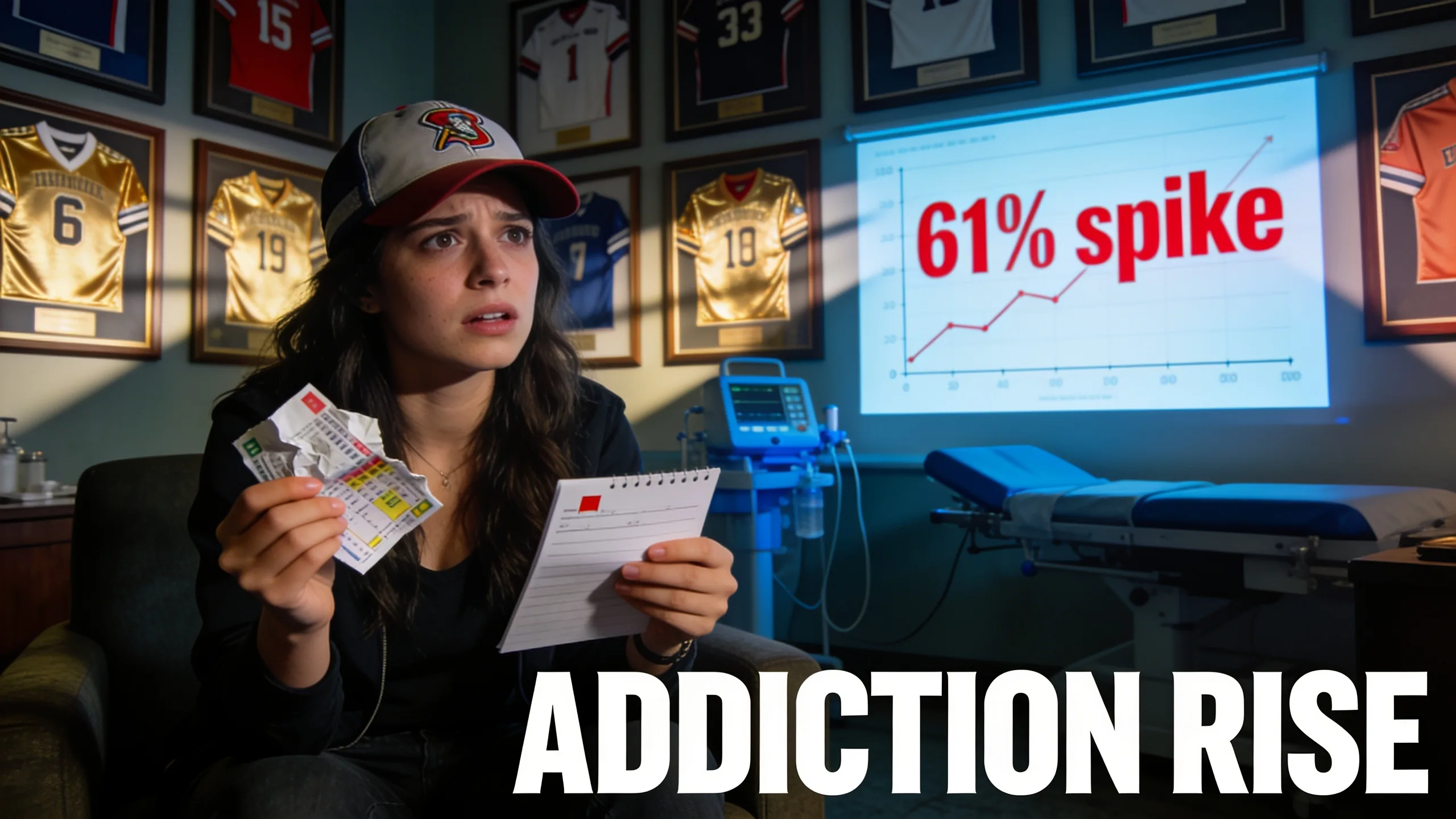
A new Epic Research study found that diagnosed gambling disorder rates climbed 61% in the 39 states and Washington, D.C. that have legalized sports betting since 2018, while falling 29% in the 11 states that have not. The data, drawn from 197 million U.S. adult patient records and published June 26, 2026, marks one of the largest clinical-record studies of gambling harm since the post-PASPA betting boom began.
The divergence is sharpest among young men. Diagnosis rates for adults aged 18 to 29 more than doubled over the study period, and researchers flagged unregulated prediction markets like Kalshi and Polymarket — which sit outside state gambling law — as a possible contributor to the parallel, rather than staggered, rise across legal-betting states.
Table of Contents
What the Data Shows
Before 2018, gambling disorder diagnosis rates were nearly identical nationwide: 3.0 per 100,000 patients in states that would eventually legalize sports betting, versus 3.1 per 100,000 in states that never did. By Q1 2026, that gap had widened into a clear split. Legal-betting states rose to 4.8 per 100,000; non-legal states fell to 2.2 per 100,000.
Researchers noted the increase appeared roughly in parallel across legal states rather than tracking each state's individual legalization date — a pattern that complicates simple cause-and-effect claims but strengthens the case that something structural, not state-specific, is driving the trend.
How the Study Was Built
Epic Research, the public-benefit research arm of electronic health records giant Epic Systems, pulled data from Cosmos, a clinical dataset spanning more than 304 million patient records across 2,000 hospitals and 47,000 clinics. Two independent research teams analyzed records from January 2018 through March 2026, tracking ICD-10-CM diagnosis code F63.0 (pathological gambling) and code Z72.6.
- Study population: 197 million U.S. adults aged 18+ with at least one qualifying clinical visit
- Outcome measured: quarterly rate of patients with a gambling-related diagnosis per 100,000 active patients
- Researchers caution the figures represent a floor, not a ceiling — gambling disorder is widely under-diagnosed in clinical settings
Who Is Most Affected
Adults aged 30 to 49 had the highest overall diagnosis rate throughout the study, rising from 4.1 to 5.8 per 100,000. But the steepest trajectory belonged to the youngest cohort: men aged 18 to 29 saw rates climb from 3.2 to 7.7 per 100,000 — more than doubling — while their female counterparts rose from 0.5 to 1 per 100,000. The male-to-female gap was widest in every age band under 50.
| Age Group | Q1 2018 Rate | Q1 2026 Rate | Trend |
|---|---|---|---|
| 18–29 (men) | 3.2 / 100k | 7.7 / 100k | More than doubled |
| 30–49 | 4.1 / 100k | 5.8 / 100k | Highest overall rate |
| 50–64 | 4.1 / 100k | 4.9 / 100k | Steady rise |
| 65+ | Lower throughout | Trending up | Smallest increase |
The Prediction-Market Wildcard
One of the study's more pointed observations for the industry: researchers suggested the parallel — rather than state-staggered — rise in diagnoses may be partly explained by the growth of federally regulated prediction markets such as Kalshi and Polymarket. These platforms let users trade sports-outcome contracts nationwide regardless of state betting laws, effectively bypassing the patchwork of state-level licensing, taxation, and responsible-gambling rules that govern traditional sportsbooks.
That distinction matters for regulators already scrutinizing the category. State gaming bodies and the American Gaming Association have separately argued prediction markets erode tax revenue and consumer protections built into licensed sports betting.
What It Means for Operators and Bettors
For licensed operators, the findings arrive at a sensitive moment: state legislatures are actively debating tax rates, advertising limits, and self-exclusion tools, and a peer-reviewed-style dataset this large gives lawmakers concrete ammunition. For bettors, the takeaway is more direct — diagnosed harm is rising fastest among young men who are also the most active users of mobile betting apps.
- Operators in regulated markets should expect continued pressure for stricter deposit limits and ad restrictions, particularly for under-30 audiences
- Responsible-gambling tools and self-exclusion visibility may become a bigger differentiator as scrutiny grows
- Players who recognize escalating losses, chasing bets, or financial strain should treat it as an early signal, not a phase
Sources
This article draws on the original Epic Research dataset and independent reporting that verified its figures.
- Epic Research — Gambling Disorder Diagnoses Have Risen More Than 60% ↗ https://www.epicresearch.org/articles/gambling-disorder-diagnoses-have-risen-more-than-60-in-states-that-legalized-sports-betting/
- NBC News — Gambling Disorder Diagnoses Spike in Legal Betting States ↗ https://www.nbcnews.com/sports/sports-gambling/gambling-disorder-increased-legalized-sports-betting-rcna351785
- U.S. News — Gambling Disorders Spike Where Betting Is Legal ↗ https://www.usnews.com/news/u-s-news-decision-points/articles/2026-06-29/gambling-disorders-spike-where-betting-is-legal
- LegalSportsBetting.com — Study Shows 60% Rise in Gambling Disorder Cases ↗ https://www.legalsportsbetting.com/news/study-shows-60-rise-in-gambling-disorder-cases-since-2018-06-26-2026/
The rise in states that have legalized sports betting appeared roughly in parallel across those states rather than staggered by each state's specific legalization year — one possible explanation is the parallel growth of online prediction markets, which are not regulated as gambling at the state level.
— Epic Research, Dual-Team Study · Cosmos Dataset, June 26, 2026